Rabu, 31 Maret 2021

Ontario reports 2,333 new coronavirus cases and 15 more deaths - CP24 Toronto's Breaking News

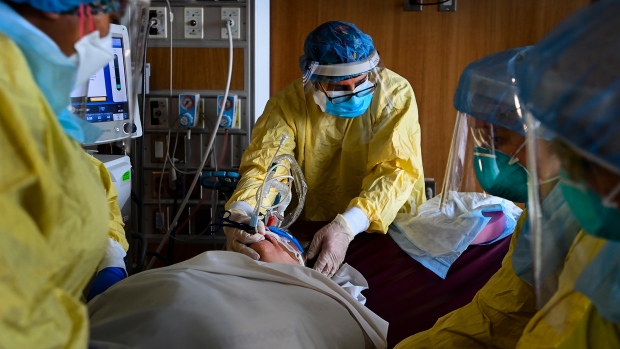
Ontario reported more than 2,300 new COVID-19 cases for a second day in a row, as patients battling the disease in intensive care units across the province hit an all-time high.

Provincial health officials logged 2,333 new infections and 15 more deaths on Wednesday.

The seven-day rolling average is now 2,316, compared to 1,676 seven days ago.

Ontario logged 2,336 new cases on Tuesday, 2,094 on Monday and 2,448 on Sunday.

Of the latest fatalities, four are among long-term care home residents. The province’s virus-related death toll is now 7,366.

Ontario labs processed 52,532 tests in the past 24 hours, up from 36,071 the previous day.

The province’s positivity rate is now 4.8 per cent, compared to 6.2 per cent yesterday, according to the Ministry of Health.

COVID-19 hospitalizations continue to rise as the province combats a third wave of the virus.

According to the Ministry of Health, 1,111 people are in Ontario hospitals due to COVID-19 infection, compared to 1,090 a day ago.

Critical Care Services Ontario says there are 421 patients battling the virus in ICUs across the province, with 32 admitted yesterday. There were 410 patients in Ontario ICUs on Tuesday, according to CCSO.

Critical care physician at Michael Garron hospital Dr. Michael Warner says the government needs to implement more public health measures now before the situation worsens.

“Even if we implement significant public health measures today, we could see ICU numbers hit 500, but if we don't, that's when things could really get bad. So politics has to be set aside, we need to protect the health and safety of people. Set economic interests aside for now and get some control over what's happening to all of us right now,” Warner told CP24 Tuesday morning.

More to come.

The numbers used in this story are found in the Ontario Ministry of Health's COVID-19 Daily Epidemiologic Summary. The number of cases for any city or region may differ slightly from what is reported by the province, because local units report figures at different times.

Let's block ads! (Why?)


https://news.google.com/__i/rss/rd/articles/CBMifWh0dHBzOi8vd3d3LmNwMjQuY29tL25ld3Mvb250YXJpby1sb2dzLTItMzMzLW5ldy1jb3ZpZC0xOS1jYXNlcy1hbmQtMTUtbW9yZS1kZWF0aHMtaWN1LW9jY3VwYW5jeS1oaXRzLWFsbC10aW1lLWhpZ2gtMS41MzY5NTE20gEA?oc=5

2021-03-31 14:21:00Z
52781475730019

Today’s coronavirus news: Pfizer announces its vaccine is safe for kids aged 12-15 years old; Toronto has administered more than half a million vaccine doses - Toronto Star

The latest coronavirus news from Canada and around the world Wednesday. This file will be updated throughout the day. Web links to longer stories if available.

8:55 a.m. York Region residents born in 1956 and earlier are now are eligible to book a vaccine.

Approximately 15,000 new vaccine appointments will be open starting at 8:30 a.m. Wednesday and available at seven venues across York Region.

The new vaccine appointments will be open at the following clinic locations:

  • Aaniin Community Centre
  • Canada’s Wonderland
  • Cortellucci Vaughan Hospital
  • Maple Community Centre
  • Georgina Ice Palace
  • Ray Twinney Recreation Complex
  • Richmond Green Sports Centre

The vaccination clinic at Cornell Community Centre located in Markham continues to book appointments for residents born in 1951 and earlier.

8:50 a.m. Halton residents aged 65 to 69 are the latest addition to the list of people eligible for a COVID-19 vaccine.

Starting Wednesday, local residents born in or before 1956 can book an appointment at one of Halton’s vaccine clinics. Appointments are available in April and can be secured through Halton’s online booking system at halton.ca/COVIDvaccines. Those who need assistance can call 311.

“We are continuing to make good progress to vaccinate our most vulnerable populations through our community clinics and mobile teams,” said regional chair Gary Carr. “Our ability to keep vaccinating at this pace remains contingent on ongoing vaccine supply from the federal and provincial governments. While the vaccine program progresses, our incredible public health team is working tirelessly to quickly identify and manage COVID-19 cases to help keep our residents safe.”

8:30 a.m. Toronto has administered more than half a million COVID-19 vaccine doses in the city to date. The city is the first health region in Ontario to administer more than 500,000 doses.

Residents born in 1951 and earlier are currently being vaccinated at five mass immunization clinics: Metro Toronto Convention Centre, Toronto Congress Centre, Scarborough Town Centre, Malvern Community Recreation Centre and Mitchell Field Arena.

On April 5, a city-operated clinic at The Hangar will open.

As of yesterday evening, approximately 74,703 people have booked COVID-19 vaccination appointments at a city-run clinic. Eligible seniors can book appointments through the dark blue “Book a Vaccine” button on http://www.toronto.ca/covid-19 or by phone through the Provincial Vaccine Information Line at 1-888-999-6488.

8:25 a.m. Images of friends sitting spaced out on a backyard patio table, or chatting on opposite ends of a park bench are part of a new COVID-19 ad campaign from Britain's National Health Service.

The message? If you're going to socialize, take it outside.

As warm spring weather begins to envelop the Canadian provinces, experts here say it's time to embrace similar rhetoric.

While they stress that no gathering is without risk entirely when it comes to COVID-19, dangers of transmission decrease considerably in outdoor environments.

Nice weekend weather tends to precipitate the same type of posts on social media from people sharing photos — mostly of younger populations — seemingly crowding parks, beaches and boardwalks, with captions and comments lambasting them for doing so.

Dr. Kwadwo Kyeremanteng, a critical care and palliative physician in Ottawa, says online shaming is not only unhelpful, but dangerous.

"What's the repercussions for a 21-year-old that's being shamed for being outside with friends and abiding by public health recommendations?" he said. "I would way rather see that than them (gathering) inside to avoid being shamed and ridiculed."

Kyerementang says public health guidance could benefit from shifting to a "harm reduction" focus that promotes safe alternatives to risky behaviour. That, he says, would allow people to "still be human beings," and maintain social connections that can improve mental health.

After a year of varying pandemic restrictions and open-and-close lockdown periods, he says people are struggling to understand what's allowed and what isn't.

7:45 a.m. With COVID-19 infections surging, and younger adults filling up intensive care units, the Toronto area is almost certainly heading back into tight lockdown, predicts a member of Ontario’s science advisory table.

“I’d be shocked if we were not in lockdown shortly before or after this weekend,” said Dr. Nathan Stall, a researcher and geriatrician at Mount Sinai Hospital.

“There are many things in jeopardy — not just people’s lives and health-care capacity. The school year is in jeopardy, businesses are in jeopardy if they’re facing a prolonged lockdown. Everyone is going to suffer. Even the summer is in jeopardy now — day camps and overnight camps for kids.”

Stall says the Ontario government has been too quick to lift restrictions after past lockdowns and the stay-at-home order imposed in January, quickly erasing gains and setting the stage for inevitable longer, harder closures when cases spike again.

Read the full story from the Star’s David Rider

7:30 a.m. Premier Doug Ford is warning of another lockdown as the number of COVID-19 patients surges at the end of a month that has seen cases almost double, creating a third wave.

“Folks, be prepared. Don’t make plans for Easter,” he said Tuesday as Ontario reported 2,336 new infections and hospitals reported their largest one-day influx of intensive-care patients of the pandemic, fuelled by more contagious variants that cause more serious illness.

“I won’t hesitate to lock things down if we have to,” added Ford. “Everything’s on the table.”

The premier’s acknowledgment that he is “extremely concerned” about case levels and the rising number of younger adults requiring hospital care comes less than two weeks after his government eased restrictions.

Read the full story from the Star’s Rob Ferguson

7:23 a.m. The federal and Ontario governments on Wednesday are expected to announce significant funding to help boost Canada’s future vaccine manufacturing capacity, the Star has learned.

Sanofi S.A., a multinational French pharmaceutical company with a manufacturing location in North York, will receive funding from both levels of government towards a nearly $1-billion production and distribution facility that will substantially boost its current vaccine production capacity, a source close to the matter told the Star.

The funding will help Sanofi build a new facility that will expand its influenza vaccine production capacity, while giving it the tools to fill-and-finish other vaccines on a mass scale.

Read the full story from the Star’s Nadine Yousif

7:06 a.m.: The cost of travel will slowly rebound from historic lows as more people receive COVID-19 vaccinations and book long-deferred trips, according to industry experts.

This time last year, air traffic in the U.S. plummeted, with 95 per cent fewer travellers passing through Transportation Security Administration checkpoints in April 2020 compared with April 2019. This reduced demand led to a corresponding decrease in airfare prices.

The average cost of a domestic round-trip ticket in the second quarter of 2020 dropped 28 per cent from the same period in 2019, down to $259, according to the Bureau of Transportation Statistics. Few travellers were monitoring these prices at the time since so few were booking flights. But now, with COVID-19 vaccinations opening the possibility of travel to millions more Americans each week , prices are once again set to change.

If you’re one of those would-be travellers, experts cautiously advise booking your travel soon. Much remains uncertain, but prices are unlikely to return to 2020 levels.

6:58 a.m.: Pfizer announced Wednesday that its COVID-19 vaccine is safe and strongly protective in kids as young as 12, a step toward possibly beginning shots in this age group before they head back to school in the fall.

Most COVID-19 vaccines being rolled out worldwide are for adults, who are at higher risk from the coronavirus. Pfizer’s vaccine is authorized for ages 16 and older. But vaccinating children of all ages will be critical to stopping the pandemic — and helping schools, at least the upper grades, start to look a little more normal after months of disruption.

In a study of 2,260 U.S. volunteers ages 12 to 15, preliminary data showed there were no cases of COVID-19 among fully vaccinated adolescents compared to 18 among those given dummy shots, Pfizer reported.

It's a small study, that hasn't yet been published, so another important piece of evidence is how well the shots revved up the kids’ immune systems. Researchers reported high levels of virus-fighting antibodies, somewhat higher than were seen in studies of young adults.

Kids had side effects similar to young adults, the company said. The main side effects are pain, fever, chills and fatigue, particularly after the second dose. The study will continue to track participants for two years for more information about long-term protection and safety.

Read more on this news here.

6:57 a.m.: More than two dozen Hungarian media outlets on Wednesday sent an open letter to the government demanding greater transparency and access to hospitals for journalists covering the COVID-19 pandemic.

Only Hungary's state media have been allowed inside COVID wards, and journalists have complained that a government order prohibiting medical staff from speaking to reporters has made it impossible to report on worsening conditions inside hospitals, creating a false picture of the situation's severity.

“Doctors and nurses are not permitted to speak publicly while members of the press are not allowed into hospitals, so we are unable to report on what happens there,” the letter reads.

Loading...

Loading...Loading...Loading...Loading...Loading...

The outlets — 28 in all - demanded that journalists be granted access to report on conditions in COVID-19 wards, and that medical staff, who are prohibited by ministerial decree from speaking to the media, be permitted to give interviews.

“Since people are cut off from this information ... many are still downplaying the dangers of the pandemic, and are not observing protective measures which is leading to more illness and thus an exacerbation of the pandemic," the letter reads.

6:16 a.m.: Belgium has an extra unexpected hurdle to overcome in its fight against the coronavirus: a bout of gorgeous weather.

Temperatures in Belgium have never been so high so early in the year — reaching 24.5 degrees Celsius (76 Fahrenheit) — and the warm weather is bringing thousands of people to coastal beaches and parks amid a worrying surge of COVID-19 cases.

The good weather was expected to continue until Friday and the start of the Easter weekend. Good news for the 11.5 million Belgians craving sun after a gloomy winter, but a real worry for the government struggling to deal with a third wave of infections.

In response to the number of passengers on its trains, Belgium's national rail company, SNCB, was forced to activate a “stop-and-go” system to prevent travellers from boarding in several train stations packed to the rafters on Tuesday.

Under the COVID-19 restrictions imposed in Belgium, residents are banned from travelling abroad but can move freely across the country. Many did not resist the appeal of a grand day out to the North Sea beaches, especially after the government decided last week to shut down schools for an extra week before the Easter school break in a bid to slow infections.

That move could ultimately backfire.

“It's too crowded. And you don’t have to be a great scientist to predict that. The weather is good, and the Belgian (train pass) with free rides is still valid until the end of the month. It was bound to go wrong," Western Flanders Governor Carl Decaluwe told Het Niewsblad newspaper. “I’m holding my breath for the Easter holidays."

Both Decaluwe and the SNCB are now advising against trips to the coast, but the situation in big cities is also a source of worry. In Brussels, for instance, residents late Tuesday gathered en masse in one of the city’s largest parks to enjoy al fresco drinks and outdoor games. Despite restrictions limiting outside gatherings to four people, large groups were spotted sitting on the grass.

Although mandatory mask-wearing outdoors is in force, many did not bother with the rule.

5:50 a.m.: Millions of additional doses of COVID-19 vaccine are expected to arrive from three different suppliers before Canada Day as Prime Minister Justin Trudeau asked people to “stay strong, a little longer.”

“We’re entering the final stretch of this crisis,” Trudeau said at a news conference on Tuesday in Ottawa.

Trudeau said Pfizer and BioNTech will send another five million doses of their vaccine to Canada in June, bringing total shipments from the company in the spring to 17.8 million. Pfizer is expected to ship more than one million doses a week in April and May, and more than two million every week in June.

Procurement Minister Anita Anand said Canada now expects 4.4 million doses of the AstraZeneca vaccine by June 30, and the first shipments of Johnson & Johnson’s single-dose vaccine are set to arrive at the end of April. She doesn’t know yet how many doses will be in that first shipment.

Even without J&J, and barring any unexpected interruptions in production or export of vaccines, Canada is in line to get more than 44 million doses before Canada Day.

That should mean all adults over 18 will be offered a vaccine faster, and that the wait for a second dose may not be as long as the current four months.

5:49 a.m.: It’s hard for Prentice Scott to choose a highlight from a day spent vaccinating seniors against COVID-19 in the lobby of their Windsor, Ont., apartment building.

“Everybody that comes into that room that sits down at my table to get the vaccination is extremely pleased,” the community paramedic said in a recent interview.

Scott’s team with Essex-Windsor EMS is one of several across Ontario bringing vaccinations to homebound seniors who can’t get to immunization clinics.

The program in Windsor started earlier this month, bringing pop-up clinics to apartment buildings with a high number of eligible seniors. A similar project is underway in Sudbury, Ont., while paramedics and other care providers in Toronto are also taking vaccines to homebound seniors.

Scott said the job has brought hope to the paramedics and as well as their patients.

“It feels good trying to lick this virus, to get rid of it,” he said. “I think what we’re doing right now, getting to the nitty gritty, the corners where people can’t get the vaccination is, is paramount.”

Programs like the one offered by Scott’s team and other paramedics offer a solution to the growing vaccination gap among the oldest Ontarians.

5:48 a.m.: As warm spring weather begins to envelop the Canadian provinces, experts here say it’s time to embrace similar rhetoric about moving outdoors.

While they stress that no gathering is without risk entirely when it comes to COVID-19, dangers of transmission decrease considerably in outdoor environments.

Nice weekend weather tends to precipitate the same type of posts on social media from people sharing photos — mostly of younger populations — seemingly crowding parks, beaches and boardwalks, with captions and comments lambasting them for doing so.

Dr. Kwadwo Kyeremanteng, a critical care and palliative physician in Ottawa, says online shaming is not only unhelpful, but dangerous.

“What’s the repercussions for a 21-year-old that’s being shamed for being outside with friends and abiding by public health recommendations?” he said. “I would way rather see that than them (gathering) inside to avoid being shamed and ridiculed.”

Kyerementang says public health guidance could benefit from shifting to a “harm reduction” focus that promotes safe alternatives to risky behaviour. That, he says, would allow people to “still be human beings,” and maintain social connections that can improve mental health.

5:45 a.m.: French President Emmanuel Macron scheduled a televised address to the nation for Wednesday night, a possible harbinger of tighter restrictions to combat surging coronavirus hospitalizations.

Previous nationwide lockdowns in March and October of 2020 were announced by Macron in televised speeches. His office said Wednesday that Macron will address the nation at 8 p.m. (1800 GMT), without saying what he will announce.

Ahead of his weekly coronavirus strategy meeting Wednesday with ministers and aides, Macron was under intensifying pressure to close schools and further restrict people’s movements to ease growing pressure on hospitals.

The total number of COVID-19 patients in intensive care in France surged past 5,000 on Tuesday, the first time in 11 months that the figure has been that high

Short of a full lockdown, Macron is running out of alternatives to make a major dent in the renewed surge of infections that has led to growing questions about his government’s virus strategies. With presidential elections scheduled for 2022, Macron is having to weigh both political and health considerations.

5:44 a.m.: Official figures show that the British economy ended 2020 on a stronger footing than previously thought but that it suffered a bigger than anticipated fall in output in the immediate aftermath of the first coronavirus lockdown.

In its latest revisions for 2020 data, the Office for National Statistics said Wednesday that the British economy contracted by 19.5 per cent during the second quarter, the first full quarter of lockdown. That was worse that the 19 per cent initial estimate. However, it said, the economy rebounded by 16.9 per cent and 1.3 per cent in the third and fourth quarters, better than the previous estimates of 16.1 per cent and 1 per cent.

Overall, the agency said, the British economy ended 2020 9.8 per cent smaller, slightly better than the previous estimate of 9.9 per cent. Despite the modest revision, the contraction last year was the deepest in over 300 years.

Wednesday 5:42 a.m.: At least nine people have tested positive for COVID-19 in a Chinese city on the border with Myanmar, health officials said Wednesday.

Five are Chinese citizens are four are Myanmar nationals, the Yunnan Province Health Commission said in a report posted online.

The city of Ruili, with a population of about 210,000 people, said all residents would be tested for COVID-19 and would have to home quarantine for one week. The residential compound where the infections were found has been locked down.

Read Tuesday’s coronavirus news.

Let's block ads! (Why?)


https://news.google.com/__i/rss/rd/articles/CBMiaGh0dHBzOi8vd3d3LnRoZXN0YXIuY29tL25ld3MvY2FuYWRhLzIwMjEvMDMvMzEvY29yb25hdmlydXMtY292aWQtMTktdXBkYXRlcy10b3JvbnRvLWNhbmFkYS1tYXJjaC0zMS5odG1s0gFsaHR0cHM6Ly93d3cudGhlc3Rhci5jb20vYW1wL25ld3MvY2FuYWRhLzIwMjEvMDMvMzEvY29yb25hdmlydXMtY292aWQtMTktdXBkYXRlcy10b3JvbnRvLWNhbmFkYS1tYXJjaC0zMS5odG1s?oc=5

2021-03-31 12:56:15Z
52781470078810
Today’s coronavirus news: Pfizer announces its vaccine is safe for kids aged 12-15 years old; Toronto has administered more than half a million vaccine doses - Toronto Star

The latest coronavirus news from Canada and around the world Wednesday. This file will be updated throughout the day. Web links to longer stories if available.

8:30 a.m. Toronto has administered more than half a million COVID-19 vaccine doses in the city to date. The city is the first health region in Ontario to administer more than 500,000 doses.

Residents born in 1951 and earlier are currently being vaccinated at five mass immunization clinics: Metro Toronto Convention Centre, Toronto Congress Centre, Scarborough Town Centre, Malvern Community Recreation Centre and Mitchell Field Arena.

On April 5, a city-operated clinic at The Hangar will open.

As of yesterday evening, approximately 74,703 people have booked COVID-19 vaccination appointments at a city-run clinic. Eligible seniors can book appointments through the dark blue “Book a Vaccine” button on http://www.toronto.ca/covid-19 or by phone through the Provincial Vaccine Information Line at 1-888-999-6488.

8:25 a.m. Images of friends sitting spaced out on a backyard patio table, or chatting on opposite ends of a park bench are part of a new COVID-19 ad campaign from Britain's National Health Service.

The message? If you're going to socialize, take it outside.

As warm spring weather begins to envelop the Canadian provinces, experts here say it's time to embrace similar rhetoric.

While they stress that no gathering is without risk entirely when it comes to COVID-19, dangers of transmission decrease considerably in outdoor environments.

Nice weekend weather tends to precipitate the same type of posts on social media from people sharing photos — mostly of younger populations — seemingly crowding parks, beaches and boardwalks, with captions and comments lambasting them for doing so.

Dr. Kwadwo Kyeremanteng, a critical care and palliative physician in Ottawa, says online shaming is not only unhelpful, but dangerous.

"What's the repercussions for a 21-year-old that's being shamed for being outside with friends and abiding by public health recommendations?" he said. "I would way rather see that than them (gathering) inside to avoid being shamed and ridiculed."

Kyerementang says public health guidance could benefit from shifting to a "harm reduction" focus that promotes safe alternatives to risky behaviour. That, he says, would allow people to "still be human beings," and maintain social connections that can improve mental health.

After a year of varying pandemic restrictions and open-and-close lockdown periods, he says people are struggling to understand what's allowed and what isn't.

7:45 a.m. With COVID-19 infections surging, and younger adults filling up intensive care units, the Toronto area is almost certainly heading back into tight lockdown, predicts a member of Ontario’s science advisory table.

“I’d be shocked if we were not in lockdown shortly before or after this weekend,” said Dr. Nathan Stall, a researcher and geriatrician at Mount Sinai Hospital.

“There are many things in jeopardy — not just people’s lives and health-care capacity. The school year is in jeopardy, businesses are in jeopardy if they’re facing a prolonged lockdown. Everyone is going to suffer. Even the summer is in jeopardy now — day camps and overnight camps for kids.”

Stall says the Ontario government has been too quick to lift restrictions after past lockdowns and the stay-at-home order imposed in January, quickly erasing gains and setting the stage for inevitable longer, harder closures when cases spike again.

Read the full story from the Star’s David Rider

7:30 a.m. Premier Doug Ford is warning of another lockdown as the number of COVID-19 patients surges at the end of a month that has seen cases almost double, creating a third wave.

“Folks, be prepared. Don’t make plans for Easter,” he said Tuesday as Ontario reported 2,336 new infections and hospitals reported their largest one-day influx of intensive-care patients of the pandemic, fuelled by more contagious variants that cause more serious illness.

“I won’t hesitate to lock things down if we have to,” added Ford. “Everything’s on the table.”

The premier’s acknowledgment that he is “extremely concerned” about case levels and the rising number of younger adults requiring hospital care comes less than two weeks after his government eased restrictions.

Read the full story from the Star’s Rob Ferguson

7:23 a.m. The federal and Ontario governments on Wednesday are expected to announce significant funding to help boost Canada’s future vaccine manufacturing capacity, the Star has learned.

Sanofi S.A., a multinational French pharmaceutical company with a manufacturing location in North York, will receive funding from both levels of government towards a nearly $1-billion production and distribution facility that will substantially boost its current vaccine production capacity, a source close to the matter told the Star.

The funding will help Sanofi build a new facility that will expand its influenza vaccine production capacity, while giving it the tools to fill-and-finish other vaccines on a mass scale.

Read the full story from the Star’s Nadine Yousif

7:06 a.m.: The cost of travel will slowly rebound from historic lows as more people receive COVID-19 vaccinations and book long-deferred trips, according to industry experts.

This time last year, air traffic in the U.S. plummeted, with 95 per cent fewer travellers passing through Transportation Security Administration checkpoints in April 2020 compared with April 2019. This reduced demand led to a corresponding decrease in airfare prices.

The average cost of a domestic round-trip ticket in the second quarter of 2020 dropped 28 per cent from the same period in 2019, down to $259, according to the Bureau of Transportation Statistics. Few travellers were monitoring these prices at the time since so few were booking flights. But now, with COVID-19 vaccinations opening the possibility of travel to millions more Americans each week , prices are once again set to change.

If you’re one of those would-be travellers, experts cautiously advise booking your travel soon. Much remains uncertain, but prices are unlikely to return to 2020 levels.

6:58 a.m.: Pfizer announced Wednesday that its COVID-19 vaccine is safe and strongly protective in kids as young as 12, a step toward possibly beginning shots in this age group before they head back to school in the fall.

Most COVID-19 vaccines being rolled out worldwide are for adults, who are at higher risk from the coronavirus. Pfizer’s vaccine is authorized for ages 16 and older. But vaccinating children of all ages will be critical to stopping the pandemic — and helping schools, at least the upper grades, start to look a little more normal after months of disruption.

In a study of 2,260 U.S. volunteers ages 12 to 15, preliminary data showed there were no cases of COVID-19 among fully vaccinated adolescents compared to 18 among those given dummy shots, Pfizer reported.

It's a small study, that hasn't yet been published, so another important piece of evidence is how well the shots revved up the kids’ immune systems. Researchers reported high levels of virus-fighting antibodies, somewhat higher than were seen in studies of young adults.

Kids had side effects similar to young adults, the company said. The main side effects are pain, fever, chills and fatigue, particularly after the second dose. The study will continue to track participants for two years for more information about long-term protection and safety.

Read more on this news here.

6:57 a.m.: More than two dozen Hungarian media outlets on Wednesday sent an open letter to the government demanding greater transparency and access to hospitals for journalists covering the COVID-19 pandemic.

Only Hungary's state media have been allowed inside COVID wards, and journalists have complained that a government order prohibiting medical staff from speaking to reporters has made it impossible to report on worsening conditions inside hospitals, creating a false picture of the situation's severity.

“Doctors and nurses are not permitted to speak publicly while members of the press are not allowed into hospitals, so we are unable to report on what happens there,” the letter reads.

The outlets — 28 in all - demanded that journalists be granted access to report on conditions in COVID-19 wards, and that medical staff, who are prohibited by ministerial decree from speaking to the media, be permitted to give interviews.

“Since people are cut off from this information ... many are still downplaying the dangers of the pandemic, and are not observing protective measures which is leading to more illness and thus an exacerbation of the pandemic," the letter reads.

6:16 a.m.: Belgium has an extra unexpected hurdle to overcome in its fight against the coronavirus: a bout of gorgeous weather.

Temperatures in Belgium have never been so high so early in the year — reaching 24.5 degrees Celsius (76 Fahrenheit) — and the warm weather is bringing thousands of people to coastal beaches and parks amid a worrying surge of COVID-19 cases.

The good weather was expected to continue until Friday and the start of the Easter weekend. Good news for the 11.5 million Belgians craving sun after a gloomy winter, but a real worry for the government struggling to deal with a third wave of infections.

Loading...

Loading...Loading...Loading...Loading...Loading...

In response to the number of passengers on its trains, Belgium's national rail company, SNCB, was forced to activate a “stop-and-go” system to prevent travellers from boarding in several train stations packed to the rafters on Tuesday.

Under the COVID-19 restrictions imposed in Belgium, residents are banned from travelling abroad but can move freely across the country. Many did not resist the appeal of a grand day out to the North Sea beaches, especially after the government decided last week to shut down schools for an extra week before the Easter school break in a bid to slow infections.

That move could ultimately backfire.

“It's too crowded. And you don’t have to be a great scientist to predict that. The weather is good, and the Belgian (train pass) with free rides is still valid until the end of the month. It was bound to go wrong," Western Flanders Governor Carl Decaluwe told Het Niewsblad newspaper. “I’m holding my breath for the Easter holidays."

Both Decaluwe and the SNCB are now advising against trips to the coast, but the situation in big cities is also a source of worry. In Brussels, for instance, residents late Tuesday gathered en masse in one of the city’s largest parks to enjoy al fresco drinks and outdoor games. Despite restrictions limiting outside gatherings to four people, large groups were spotted sitting on the grass.

Although mandatory mask-wearing outdoors is in force, many did not bother with the rule.

5:50 a.m.: Millions of additional doses of COVID-19 vaccine are expected to arrive from three different suppliers before Canada Day as Prime Minister Justin Trudeau asked people to “stay strong, a little longer.”

“We’re entering the final stretch of this crisis,” Trudeau said at a news conference on Tuesday in Ottawa.

Trudeau said Pfizer and BioNTech will send another five million doses of their vaccine to Canada in June, bringing total shipments from the company in the spring to 17.8 million. Pfizer is expected to ship more than one million doses a week in April and May, and more than two million every week in June.

Procurement Minister Anita Anand said Canada now expects 4.4 million doses of the AstraZeneca vaccine by June 30, and the first shipments of Johnson & Johnson’s single-dose vaccine are set to arrive at the end of April. She doesn’t know yet how many doses will be in that first shipment.

Even without J&J, and barring any unexpected interruptions in production or export of vaccines, Canada is in line to get more than 44 million doses before Canada Day.

That should mean all adults over 18 will be offered a vaccine faster, and that the wait for a second dose may not be as long as the current four months.

5:49 a.m.: It’s hard for Prentice Scott to choose a highlight from a day spent vaccinating seniors against COVID-19 in the lobby of their Windsor, Ont., apartment building.

“Everybody that comes into that room that sits down at my table to get the vaccination is extremely pleased,” the community paramedic said in a recent interview.

Scott’s team with Essex-Windsor EMS is one of several across Ontario bringing vaccinations to homebound seniors who can’t get to immunization clinics.

The program in Windsor started earlier this month, bringing pop-up clinics to apartment buildings with a high number of eligible seniors. A similar project is underway in Sudbury, Ont., while paramedics and other care providers in Toronto are also taking vaccines to homebound seniors.

Scott said the job has brought hope to the paramedics and as well as their patients.

“It feels good trying to lick this virus, to get rid of it,” he said. “I think what we’re doing right now, getting to the nitty gritty, the corners where people can’t get the vaccination is, is paramount.”

Programs like the one offered by Scott’s team and other paramedics offer a solution to the growing vaccination gap among the oldest Ontarians.

5:48 a.m.: As warm spring weather begins to envelop the Canadian provinces, experts here say it’s time to embrace similar rhetoric about moving outdoors.

While they stress that no gathering is without risk entirely when it comes to COVID-19, dangers of transmission decrease considerably in outdoor environments.

Nice weekend weather tends to precipitate the same type of posts on social media from people sharing photos — mostly of younger populations — seemingly crowding parks, beaches and boardwalks, with captions and comments lambasting them for doing so.

Dr. Kwadwo Kyeremanteng, a critical care and palliative physician in Ottawa, says online shaming is not only unhelpful, but dangerous.

“What’s the repercussions for a 21-year-old that’s being shamed for being outside with friends and abiding by public health recommendations?” he said. “I would way rather see that than them (gathering) inside to avoid being shamed and ridiculed.”

Kyerementang says public health guidance could benefit from shifting to a “harm reduction” focus that promotes safe alternatives to risky behaviour. That, he says, would allow people to “still be human beings,” and maintain social connections that can improve mental health.

5:45 a.m.: French President Emmanuel Macron scheduled a televised address to the nation for Wednesday night, a possible harbinger of tighter restrictions to combat surging coronavirus hospitalizations.

Previous nationwide lockdowns in March and October of 2020 were announced by Macron in televised speeches. His office said Wednesday that Macron will address the nation at 8 p.m. (1800 GMT), without saying what he will announce.

Ahead of his weekly coronavirus strategy meeting Wednesday with ministers and aides, Macron was under intensifying pressure to close schools and further restrict people’s movements to ease growing pressure on hospitals.

The total number of COVID-19 patients in intensive care in France surged past 5,000 on Tuesday, the first time in 11 months that the figure has been that high

Short of a full lockdown, Macron is running out of alternatives to make a major dent in the renewed surge of infections that has led to growing questions about his government’s virus strategies. With presidential elections scheduled for 2022, Macron is having to weigh both political and health considerations.

5:44 a.m.: Official figures show that the British economy ended 2020 on a stronger footing than previously thought but that it suffered a bigger than anticipated fall in output in the immediate aftermath of the first coronavirus lockdown.

In its latest revisions for 2020 data, the Office for National Statistics said Wednesday that the British economy contracted by 19.5 per cent during the second quarter, the first full quarter of lockdown. That was worse that the 19 per cent initial estimate. However, it said, the economy rebounded by 16.9 per cent and 1.3 per cent in the third and fourth quarters, better than the previous estimates of 16.1 per cent and 1 per cent.

Overall, the agency said, the British economy ended 2020 9.8 per cent smaller, slightly better than the previous estimate of 9.9 per cent. Despite the modest revision, the contraction last year was the deepest in over 300 years.

Wednesday 5:42 a.m.: At least nine people have tested positive for COVID-19 in a Chinese city on the border with Myanmar, health officials said Wednesday.

Five are Chinese citizens are four are Myanmar nationals, the Yunnan Province Health Commission said in a report posted online.

The city of Ruili, with a population of about 210,000 people, said all residents would be tested for COVID-19 and would have to home quarantine for one week. The residential compound where the infections were found has been locked down.

Read Tuesday’s coronavirus news.

Let's block ads! (Why?)


https://news.google.com/__i/rss/rd/articles/CBMiaGh0dHBzOi8vd3d3LnRoZXN0YXIuY29tL25ld3MvY2FuYWRhLzIwMjEvMDMvMzEvY29yb25hdmlydXMtY292aWQtMTktdXBkYXRlcy10b3JvbnRvLWNhbmFkYS1tYXJjaC0zMS5odG1s0gFsaHR0cHM6Ly93d3cudGhlc3Rhci5jb20vYW1wL25ld3MvY2FuYWRhLzIwMjEvMDMvMzEvY29yb25hdmlydXMtY292aWQtMTktdXBkYXRlcy10b3JvbnRvLWNhbmFkYS1tYXJjaC0zMS5odG1s?oc=5

2021-03-31 12:33:45Z
52781470078810

Pfizer says COVID-19 vaccine 100% effective in younger teens - 680 News

Pfizer announced Wednesday that its COVID-19 vaccine is safe and strongly protective in kids as young as 12, a step toward possibly beginning shots in this age group before they head back to school in the fall.

Most COVID-19 vaccines being rolled out worldwide are for adults, who are at higher risk from the coronavirus. Pfizer’s vaccine is authorized for ages 16 and older. But vaccinating children of all ages will be critical to stopping the pandemic — and helping schools, at least the upper grades, start to look a little more normal after months of disruption.

In a study of 2,260 U.S. volunteers ages 12 to 15, preliminary data showed there were no cases of COVID-19 among fully vaccinated adolescents compared to 18 among those given dummy shots, Pfizer reported.

It’s a small study, that hasn’t yet been published, so another important piece of evidence is how well the shots revved up the kids’ immune systems. Researchers reported high levels of virus-fighting antibodies, somewhat higher than were seen in studies of young adults.

Kids had side effects similar to young adults, the company said. The main side effects are pain, fever, chills and fatigue, particularly after the second dose. The study will continue to track participants for two years for more information about long-term protection and safety.


RELATED: Ontario bracing for 1.5M doses of Pfizer vaccine by end of April, Moderna shipment delayed


Pfizer and its German partner BioNTech in the coming weeks plan to ask the U.S. Food and Drug Administration and European regulators to allow emergency use of the shots starting at age 12.

“We share the urgency to expand the use of our vaccine,” Pfizer CEO Albert Bourla said in a statement. He expressed “the hope of starting to vaccinate this age group before the start of the next school year” in the United States.

Pfizer isn’t the only company seeking to lower the age limit for its vaccine. Results also are expected soon from a U.S. study of Moderna’s vaccine in 12- to 17-year-olds.

But in a sign that the findings were promising, the FDA already allowed both companies to begin U.S. studies in children 11 and younger, working their way to as young as 6-month-old.

AstraZeneca last month began a study of its vaccine among 6- to 17-year-olds in Britain. Johnson & Johnson is planning its own pediatric studies. And in China, Sinovac recently announced it has submitted preliminary data to Chinese regulators showing its vaccine is safe in children as young as 3.

While most COVID-19 vaccines being used globally were first tested in tens of thousands of adults, pediatric studies won’t need to be nearly as large. Scientists have safety information from those studies and from subsequent vaccinations in millions more adults.

One key question is the dosage: Pfizer gave the 12-and-older participants the same dose adults receive, while testing different doses in younger children.

It’s not clear how quickly the FDA would act on Pfizer’s request to allow vaccination starting at age 12. Another question is when the country would have enough supply of shots — and people to get them into adolescents’ arms — to let kids start getting in line.

Supplies are set to steadily increase over the spring and summer, at the same time states are opening vaccinations to younger, healthier adults who until now haven’t had a turn.


RELATED: Pfizer vaccine deliveries accelerated, Canada expecting 5M doses by June


Children represent about 13% of COVID-19 cases documented in the U.S. And while children are far less likely than adults to get seriously ill, at least 268 have died from COVID-19 in the U.S. alone and more than 13,500 have been hospitalized, according to a tally by the American Academy of Pediatrics. That’s more than die from the flu in an average year. Additionally, a small number have developed a serious inflammatory condition linked to the coronavirus.

Caleb Chung, who turns 13 later this week, agreed to volunteer after his father, a Duke University pediatrician, presented the option. He doesn’t know if he received the vaccine or a placebo.

“Usually I’m just at home doing online school and there’s not much I can really do to fight back against the virus,” Caleb said in a recent interview. The study “was really somewhere that I could actually help out.”

His father, Dr. Richard Chung, said he’s proud of his son and all the other children volunteering for the needle pricks, blood tests and other tasks a study entails.

“We need kids to do these trials so that kids can get protected. Adults can’t do that for them,” Chung said.

Let's block ads! (Why?)


https://news.google.com/__i/rss/rd/articles/CBMiXWh0dHBzOi8vd3d3LjY4MG5ld3MuY29tLzIwMjEvMDMvMzEvcGZpemVyLXNheXMtaXRzLWNvdmlkLTE5LXZhY2NpbmUtcHJvdGVjdHMteW91bmdlci10ZWVucy0yL9IBYWh0dHBzOi8vd3d3LjY4MG5ld3MuY29tLzIwMjEvMDMvMzEvcGZpemVyLXNheXMtaXRzLWNvdmlkLTE5LXZhY2NpbmUtcHJvdGVjdHMteW91bmdlci10ZWVucy0yL2FtcC8?oc=5

2021-03-31 11:07:18Z
CBMiXWh0dHBzOi8vd3d3LjY4MG5ld3MuY29tLzIwMjEvMDMvMzEvcGZpemVyLXNheXMtaXRzLWNvdmlkLTE5LXZhY2NpbmUtcHJvdGVjdHMteW91bmdlci10ZWVucy0yL9IBYWh0dHBzOi8vd3d3LjY4MG5ld3MuY29tLzIwMjEvMDMvMzEvcGZpemVyLXNheXMtaXRzLWNvdmlkLTE5LXZhY2NpbmUtcHJvdGVjdHMteW91bmdlci10ZWVucy0yL2FtcC8

Today’s coronavirus news: Pfizer announces its vaccine is safe for kids aged 12-15 years old; Millions of additional doses expected to arrive from 3 different suppliers before Canada Day - Toronto Star

The latest coronavirus news from Canada and around the world Wednesday. This file will be updated throughout the day. Web links to longer stories if available.

7:45 a.m. With COVID-19 infections surging, and younger adults filling up intensive care units, the Toronto area is almost certainly heading back into tight lockdown, predicts a member of Ontario’s science advisory table.

“I’d be shocked if we were not in lockdown shortly before or after this weekend,” said Dr. Nathan Stall, a researcher and geriatrician at Mount Sinai Hospital.

“There are many things in jeopardy — not just people’s lives and health-care capacity. The school year is in jeopardy, businesses are in jeopardy if they’re facing a prolonged lockdown. Everyone is going to suffer. Even the summer is in jeopardy now — day camps and overnight camps for kids.”

Stall says the Ontario government has been too quick to lift restrictions after past lockdowns and the stay-at-home order imposed in January, quickly erasing gains and setting the stage for inevitable longer, harder closures when cases spike again.

Read the full story from the Star’s David Rider

7:30 a.m. Premier Doug Ford is warning of another lockdown as the number of COVID-19 patients surges at the end of a month that has seen cases almost double, creating a third wave.

“Folks, be prepared. Don’t make plans for Easter,” he said Tuesday as Ontario reported 2,336 new infections and hospitals reported their largest one-day influx of intensive-care patients of the pandemic, fuelled by more contagious variants that cause more serious illness.

“I won’t hesitate to lock things down if we have to,” added Ford. “Everything’s on the table.”

The premier’s acknowledgment that he is “extremely concerned” about case levels and the rising number of younger adults requiring hospital care comes less than two weeks after his government eased restrictions.

Read the full story from the Star’s Rob Ferguson

7:23 a.m. The federal and Ontario governments on Wednesday are expected to announce significant funding to help boost Canada’s future vaccine manufacturing capacity, the Star has learned.

Sanofi S.A., a multinational French pharmaceutical company with a manufacturing location in North York, will receive funding from both levels of government towards a nearly $1-billion production and distribution facility that will substantially boost its current vaccine production capacity, a source close to the matter told the Star.

The funding will help Sanofi build a new facility that will expand its influenza vaccine production capacity, while giving it the tools to fill-and-finish other vaccines on a mass scale.

Read the full story from the Star’s Nadine Yousif

7:06 a.m.: The cost of travel will slowly rebound from historic lows as more people receive COVID-19 vaccinations and book long-deferred trips, according to industry experts.

This time last year, air traffic in the U.S. plummeted, with 95 per cent fewer travellers passing through Transportation Security Administration checkpoints in April 2020 compared with April 2019. This reduced demand led to a corresponding decrease in airfare prices.

The average cost of a domestic round-trip ticket in the second quarter of 2020 dropped 28 per cent from the same period in 2019, down to $259, according to the Bureau of Transportation Statistics. Few travellers were monitoring these prices at the time since so few were booking flights. But now, with COVID-19 vaccinations opening the possibility of travel to millions more Americans each week , prices are once again set to change.

If you’re one of those would-be travellers, experts cautiously advise booking your travel soon. Much remains uncertain, but prices are unlikely to return to 2020 levels.

6:58 a.m.: Pfizer announced Wednesday that its COVID-19 vaccine is safe and strongly protective in kids as young as 12, a step toward possibly beginning shots in this age group before they head back to school in the fall.

Most COVID-19 vaccines being rolled out worldwide are for adults, who are at higher risk from the coronavirus. Pfizer’s vaccine is authorized for ages 16 and older. But vaccinating children of all ages will be critical to stopping the pandemic — and helping schools, at least the upper grades, start to look a little more normal after months of disruption.

In a study of 2,260 U.S. volunteers ages 12 to 15, preliminary data showed there were no cases of COVID-19 among fully vaccinated adolescents compared to 18 among those given dummy shots, Pfizer reported.

It's a small study, that hasn't yet been published, so another important piece of evidence is how well the shots revved up the kids’ immune systems. Researchers reported high levels of virus-fighting antibodies, somewhat higher than were seen in studies of young adults.

Kids had side effects similar to young adults, the company said. The main side effects are pain, fever, chills and fatigue, particularly after the second dose. The study will continue to track participants for two years for more information about long-term protection and safety.

Read more on this news here.

6:57 a.m.: More than two dozen Hungarian media outlets on Wednesday sent an open letter to the government demanding greater transparency and access to hospitals for journalists covering the COVID-19 pandemic.

Only Hungary's state media have been allowed inside COVID wards, and journalists have complained that a government order prohibiting medical staff from speaking to reporters has made it impossible to report on worsening conditions inside hospitals, creating a false picture of the situation's severity.

“Doctors and nurses are not permitted to speak publicly while members of the press are not allowed into hospitals, so we are unable to report on what happens there,” the letter reads.

The outlets — 28 in all - demanded that journalists be granted access to report on conditions in COVID-19 wards, and that medical staff, who are prohibited by ministerial decree from speaking to the media, be permitted to give interviews.

“Since people are cut off from this information ... many are still downplaying the dangers of the pandemic, and are not observing protective measures which is leading to more illness and thus an exacerbation of the pandemic," the letter reads.

6:16 a.m.: Belgium has an extra unexpected hurdle to overcome in its fight against the coronavirus: a bout of gorgeous weather.

Temperatures in Belgium have never been so high so early in the year — reaching 24.5 degrees Celsius (76 Fahrenheit) — and the warm weather is bringing thousands of people to coastal beaches and parks amid a worrying surge of COVID-19 cases.

The good weather was expected to continue until Friday and the start of the Easter weekend. Good news for the 11.5 million Belgians craving sun after a gloomy winter, but a real worry for the government struggling to deal with a third wave of infections.

In response to the number of passengers on its trains, Belgium's national rail company, SNCB, was forced to activate a “stop-and-go” system to prevent travellers from boarding in several train stations packed to the rafters on Tuesday.

Under the COVID-19 restrictions imposed in Belgium, residents are banned from travelling abroad but can move freely across the country. Many did not resist the appeal of a grand day out to the North Sea beaches, especially after the government decided last week to shut down schools for an extra week before the Easter school break in a bid to slow infections.

That move could ultimately backfire.

“It's too crowded. And you don’t have to be a great scientist to predict that. The weather is good, and the Belgian (train pass) with free rides is still valid until the end of the month. It was bound to go wrong," Western Flanders Governor Carl Decaluwe told Het Niewsblad newspaper. “I’m holding my breath for the Easter holidays."

Both Decaluwe and the SNCB are now advising against trips to the coast, but the situation in big cities is also a source of worry. In Brussels, for instance, residents late Tuesday gathered en masse in one of the city’s largest parks to enjoy al fresco drinks and outdoor games. Despite restrictions limiting outside gatherings to four people, large groups were spotted sitting on the grass.

Loading...

Loading...Loading...Loading...Loading...Loading...

Although mandatory mask-wearing outdoors is in force, many did not bother with the rule.

5:50 a.m.: Millions of additional doses of COVID-19 vaccine are expected to arrive from three different suppliers before Canada Day as Prime Minister Justin Trudeau asked people to “stay strong, a little longer.”

“We’re entering the final stretch of this crisis,” Trudeau said at a news conference on Tuesday in Ottawa.

Trudeau said Pfizer and BioNTech will send another five million doses of their vaccine to Canada in June, bringing total shipments from the company in the spring to 17.8 million. Pfizer is expected to ship more than one million doses a week in April and May, and more than two million every week in June.

Procurement Minister Anita Anand said Canada now expects 4.4 million doses of the AstraZeneca vaccine by June 30, and the first shipments of Johnson & Johnson’s single-dose vaccine are set to arrive at the end of April. She doesn’t know yet how many doses will be in that first shipment.

Even without J&J, and barring any unexpected interruptions in production or export of vaccines, Canada is in line to get more than 44 million doses before Canada Day.

That should mean all adults over 18 will be offered a vaccine faster, and that the wait for a second dose may not be as long as the current four months.

5:49 a.m.: It’s hard for Prentice Scott to choose a highlight from a day spent vaccinating seniors against COVID-19 in the lobby of their Windsor, Ont., apartment building.

“Everybody that comes into that room that sits down at my table to get the vaccination is extremely pleased,” the community paramedic said in a recent interview.

Scott’s team with Essex-Windsor EMS is one of several across Ontario bringing vaccinations to homebound seniors who can’t get to immunization clinics.

The program in Windsor started earlier this month, bringing pop-up clinics to apartment buildings with a high number of eligible seniors. A similar project is underway in Sudbury, Ont., while paramedics and other care providers in Toronto are also taking vaccines to homebound seniors.

Scott said the job has brought hope to the paramedics and as well as their patients.

“It feels good trying to lick this virus, to get rid of it,” he said. “I think what we’re doing right now, getting to the nitty gritty, the corners where people can’t get the vaccination is, is paramount.”

Programs like the one offered by Scott’s team and other paramedics offer a solution to the growing vaccination gap among the oldest Ontarians.

5:48 a.m.: As warm spring weather begins to envelop the Canadian provinces, experts here say it’s time to embrace similar rhetoric about moving outdoors.

While they stress that no gathering is without risk entirely when it comes to COVID-19, dangers of transmission decrease considerably in outdoor environments.

Nice weekend weather tends to precipitate the same type of posts on social media from people sharing photos — mostly of younger populations — seemingly crowding parks, beaches and boardwalks, with captions and comments lambasting them for doing so.

Dr. Kwadwo Kyeremanteng, a critical care and palliative physician in Ottawa, says online shaming is not only unhelpful, but dangerous.

“What’s the repercussions for a 21-year-old that’s being shamed for being outside with friends and abiding by public health recommendations?” he said. “I would way rather see that than them (gathering) inside to avoid being shamed and ridiculed.”

Kyerementang says public health guidance could benefit from shifting to a “harm reduction” focus that promotes safe alternatives to risky behaviour. That, he says, would allow people to “still be human beings,” and maintain social connections that can improve mental health.

5:45 a.m.: French President Emmanuel Macron scheduled a televised address to the nation for Wednesday night, a possible harbinger of tighter restrictions to combat surging coronavirus hospitalizations.

Previous nationwide lockdowns in March and October of 2020 were announced by Macron in televised speeches. His office said Wednesday that Macron will address the nation at 8 p.m. (1800 GMT), without saying what he will announce.

Ahead of his weekly coronavirus strategy meeting Wednesday with ministers and aides, Macron was under intensifying pressure to close schools and further restrict people’s movements to ease growing pressure on hospitals.

The total number of COVID-19 patients in intensive care in France surged past 5,000 on Tuesday, the first time in 11 months that the figure has been that high

Short of a full lockdown, Macron is running out of alternatives to make a major dent in the renewed surge of infections that has led to growing questions about his government’s virus strategies. With presidential elections scheduled for 2022, Macron is having to weigh both political and health considerations.

5:44 a.m.: Official figures show that the British economy ended 2020 on a stronger footing than previously thought but that it suffered a bigger than anticipated fall in output in the immediate aftermath of the first coronavirus lockdown.

In its latest revisions for 2020 data, the Office for National Statistics said Wednesday that the British economy contracted by 19.5 per cent during the second quarter, the first full quarter of lockdown. That was worse that the 19 per cent initial estimate. However, it said, the economy rebounded by 16.9 per cent and 1.3 per cent in the third and fourth quarters, better than the previous estimates of 16.1 per cent and 1 per cent.

Overall, the agency said, the British economy ended 2020 9.8 per cent smaller, slightly better than the previous estimate of 9.9 per cent. Despite the modest revision, the contraction last year was the deepest in over 300 years.

Wednesday 5:42 a.m.: At least nine people have tested positive for COVID-19 in a Chinese city on the border with Myanmar, health officials said Wednesday.

Five are Chinese citizens are four are Myanmar nationals, the Yunnan Province Health Commission said in a report posted online.

The city of Ruili, with a population of about 210,000 people, said all residents would be tested for COVID-19 and would have to home quarantine for one week. The residential compound where the infections were found has been locked down.

Read Tuesday’s coronavirus news.

Let's block ads! (Why?)


https://news.google.com/__i/rss/rd/articles/CBMiaGh0dHBzOi8vd3d3LnRoZXN0YXIuY29tL25ld3MvY2FuYWRhLzIwMjEvMDMvMzEvY29yb25hdmlydXMtY292aWQtMTktdXBkYXRlcy10b3JvbnRvLWNhbmFkYS1tYXJjaC0zMS5odG1s0gFsaHR0cHM6Ly93d3cudGhlc3Rhci5jb20vYW1wL25ld3MvY2FuYWRhLzIwMjEvMDMvMzEvY29yb25hdmlydXMtY292aWQtMTktdXBkYXRlcy10b3JvbnRvLWNhbmFkYS1tYXJjaC0zMS5odG1s?oc=5

2021-03-31 11:37:30Z
52781470078810

What you need to know about COVID-19 in Ottawa on Wednesday, March 31 - CBC.ca

Recent developments:

What's the latest?

Ontario Premier Doug Ford said yesterday the number of COVID-19 patients in intensive care is leading him to consider rule changes, along with top health officials.

Gatherings in private residences are to blame for part of the recent uptick in daily cases, according to Quebec Premier François Legault yesterday, and he says the government will coordinate with police to counter this.

Legault also singled out the Outaouais as a concerning region, with any potential rule changes having to work with rules in Ottawa.

Seventeen part-time box office employees have been let go by the National Arts Centre after a year of not being paid. Some said they expected they'd be back once the NAC opened again.

How many cases are there?

As of Tuesday, 17,177 Ottawa residents have tested positive for COVID-19. There are 1,185 known active cases, 15,529 resolved cases and 463 deaths.

Public health officials have reported more than 31,000 COVID-19 cases across eastern Ontario and western Quebec, including more than 28,000 resolved cases.

Elsewhere in eastern Ontario, 140 people have died. In western Quebec, the death toll is 172.

Akwesasne has had more than 260 residents test positive on the Canadian side of the border and seven deaths. It's had nearly 550 cases when its southern section is added.

Kitigan Zibi has had 21 confirmed cases and Tyendinaga Mohawk Territory has had seven, with one death.

CBC Ottawa is profiling those who've died of COVID-19. If you'd like to share your loved one's story, please get in touch.

What can I do?

A top science advisor says Ontario's COVID-19 spread is completely out of control. The premier said Tuesday not to gather for Easter or Passover and hinted rule changes could be coming.

Eastern Ontario ranges from red to green under the province's colour-coded pandemic scale. Restaurants, gyms, personal-care services and non-essential businesses are open.

Ottawa, the Eastern Ontario Health Unit and the Leeds, Grenville and Lanark District Health Unit are all in the red zone, which means all gatherings are capped at five people inside and 25 outside. Religious services can have more people.

WATCH | Ontario's message for the coming long weekend:

Ontario Premier Doug Ford says he will not hesitate to 'lock things down' to protect hospitals' intensive care capacity, as coronavirus cases accelerate. 0:55

Restaurants in red zones have a maximum capacity of 50 per cent to a maximum of 50 people.

In orange, red and grey zones, only people who live together can sit together inside; so can people who live alone with one other household. That expands to patios in grey.

Theatres are closed in red zones and team sports games and scrimmages are banned.

Going red also means only leaving home for essential reasons and not having indoor visitors.

The Kingston area and Renfrew County are yellow and the Belleville area is green.

Local health units can also set their own rules, like what Kingston's is doing around gatherings, Prince Edward County's is doing around travel and Renfrew County's is doing around dining.

Quebec is now in its third wave.

In western Quebec, gyms and restaurants can open under its orange zone rules, as can non-essential businesses. 

Outdoor gatherings of up to eight people are allowed. The region's curfew hours are 9:30 p.m. until 5 a.m.

Grenville-sur-la-Rouge, Que., and some of the surrounding area remains in red. The Outaouais may join it if its trends don't turn around.

WATCH | Warnings for Quebec regions, including the Outaouais:

Quebec Premier François Legault says five regions, including the Outaouais, have seen an increase in the number of positive COVID-19 cases and warned of rising hospitalizations if the trend continues. 1:24

People across the Ottawa-Gatineau area are asked to only have close contact with people they live with, be masked and distanced for all other in-person contact and only travel for essential reasons, especially between differently coloured zones.

Distancing and isolating

The novel coronavirus primarily spreads through droplets when an infected person speaks, coughs, sneezes, or breathes onto someone or something. These droplets can hang in the air.

People can be contagious without symptoms, even after getting a vaccine. New coronavirus variants can be more contagious and are spreading quickly in some places.

This means it is important to take precautions now and in the future like staying home while sick — and getting help with costs if needed — keeping hands and surfaces clean and maintaining distance from anyone you don't live with, even with a mask on.

Front Burner23:53How, exactly did COVID-19 begin?

The release of a WHO report on the origins of COVID-19 is drawing both international curiosity and concern over China’s transparency. Nature senior reporter Amy Maxmen explains the investigation’s findings as well as criticisms over its access and independence. 23:53

Masks, preferably ones that fit snugly and have three layers, are mandatory in indoor public settings in Ontario and Quebec.

OPH says residents should wear masks outside their homes whenever possible.

Health Canada recommends older adults and people with underlying medical conditions and/or weakened immune systems stay home as much as possible and get help with errands.

People have to show proof of a recent negative COVID-19 test to enter Canada by land without a fine and have to pay for their stay in a quarantine hotel if entering by air.

Anyone with COVID-19 symptoms should self-isolate, as should those who've been ordered to do so by their public health unit. The length varies in Quebec and Ontario.

Vaccines

Four COVID-19 vaccines have been approved in Canada.

Canada's task force said first doses offer such strong protection that people can wait up to four months to get a second, meaning jurisdictions can spread first doses widely.

About 290,000 doses have been given out in the wider region since mid-December, including about 121,000 doses in Ottawa and about 45,000 in western Quebec.

Ontario's first doses of Phase 1 generally went to care home residents and health-care workers.

The provincewide campaign has expanded to include more priority groups such as all people over age 75, and people 70 and older in certain regions. People can book appointments online or over the phone.

Phase 2 should include people with underlying health conditions in April, followed by people who can't work from home or are 60 and older in June.

Phase 3, slated to begin in July, will involve vaccinating anyone older than 16.

Health-care worker Thi Nguyen administers the Pfizer-BioNtech COVID-19 vaccine to a patient at a COVID-19 clinic in Ottawa's Nepean Sportsplex March 30, 2021. (Sean Kilpatrick/Canadian Press)

Local health units have some flexibility in the larger framework, so check their websites for details.

Some Ottawans in certain neighbourhoods can check their eligibility online and call the city at 613-691-5505 for an appointment. So can Indigenous people over age 40.

People who are above or turning age 60 in the Kingston area can contact one of nearly 50 pharmacies for a vaccine appointment as part of a pilot project. 

That may soon expand to Ottawa.

Quebec also started by vaccinating people in care homes and health-care workers.

The vaccination plan now covers people age 65 and older at western Quebec clinics. That will be followed by essential workers and finally the general public.

Officials expect everyone over the age of 65 to be vaccinated by mid-April and everyone who wants a shot to be able to get one by by Fête nationale on June 24.

People who qualify can make an appointment online or over the phone. Pharmacists there will also be giving shots and people can book their appointments now in Grenville-sur-la-Rouge.

Symptoms and testing

COVID-19 can range from a cold-like illness to a severe lung infection, with common symptoms including fever, a cough, vomiting and loss of taste or smell. Children tend to have an upset stomach and/or a rash.

If you have severe symptoms, call 911.

Mental health can also be affected by the pandemic, and resources are available to help.

In eastern Ontario:

Anyone seeking a test should book an appointment. 

Ontario recommends only getting tested if you have symptoms, if you've been told to by your health unit or the province, or if you fit certain other criteria.

People without symptoms but who are part of the province's targeted testing strategy can make an appointment at select pharmacies.

Travellers who need a test have very few local options to pay for one.

Check with your area's health unit for clinic locations and hours. Some are offering pop-up or mobile clinics.

In western Quebec:

Tests are strongly recommended for people with symptoms and their contacts.

Outaouais residents can make an appointment in Gatineau at 135 blvd. Saint-Raymond or 617 ave. Buckingham. They can check the wait time for the Saint-Raymond site.

There are recurring clinics by appointment in communities such as Maniwaki and Petite-Nation.

Call 1-877-644-4545 with questions, including if walk-in testing is available nearby.

First Nations, Inuit and Métis:

Akwesasne has a COVID-19 test site by appointment only and a curfew of 11 p.m. to 5 a.m. It's closed to non-essential visits until April 11.

Anyone returning to the community on the Canadian side of the international border who's been farther than 160 kilometres away — or visited Montreal — for non-essential reasons is asked to self-isolate for 14 days.

People in Pikwakanagan can book a COVID-19 test by calling 613-625-1175. Anyone in Tyendinaga who's interested in a test can call 613-967-3603 and in Kitigan Zibi, 819-449-5593.

Inuit in Ottawa can call the Akausivik Inuit Family Health Team at 613-740-0999 for service, including testing and vaccines, in Inuktitut or English on weekdays.

For more information

Let's block ads! (Why?)


https://news.google.com/__i/rss/rd/articles/CBMia2h0dHBzOi8vd3d3LmNiYy5jYS9uZXdzL2NhbmFkYS9vdHRhd2EvY292aWQxOS1vdHRhd2EtY29yb25hdmlydXMtc3ltcHRvbXMtaW5mb3JtYXRpb24tbWFyLTMxLTIwMjEtMS41OTY5OTUx0gEgaHR0cHM6Ly93d3cuY2JjLmNhL2FtcC8xLjU5Njk5NTE?oc=5

2021-03-31 11:00:27Z
52781475730019