Sabtu, 29 Februari 2020

Joe Coulombe, founder of popular Trader Joe's markets, dies - The Associated Press

LOS ANGELES (AP) — Joe Coulombe envisioned a new generation of young grocery shoppers emerging in the 1960s, one that wanted healthy, tasty, high-quality food they couldn’t find in most supermarkets and couldn’t afford to buy in the few high-end gourmet outlets.

So he found a new way to bring everything from a then-exotic snack food called granola to the California-produced wines that for flavor compared with anything from France. And he made shopping for them almost as much fun as sailing the high seas when he created Trader Joe’s, a quirky little grocery store filled with nautical themes and staffed not by managers and clerks but by “captains and mates.”

From the time he opened his first store in Pasadena, California, in 1967 until his death Friday at age 89, Coulombe watched his namesake business rise from a cult favorite of educated but underpaid young people — and a few hippies — to a retail giant with more than 500 outlets in over 40 states.

A giant yes, but one that across more than half a century has never lost its reputation for friendly service from employees decked out in goofy Hawaiian shirts, a newsletter that looks like it was published in the 1890s, and rows and rows of high-quality, moderately priced healthy food and great wine, even if you sometimes can’t ever again find exactly the same thing.

“He wanted to make sure whatever was sold in our store was of good value,” said Coulombe’s son, also named Joe, who added that his father died following a long illness. “He always did lots of taste tests. My sisters and I remember him bringing home all kinds of things for us to try. At his offices he had practically daily tastings of new products. Always the aim was to provide good food and good value to people.”

He achieved that by buying directly from wholesalers and cutting out the middleman, in many cases slapping the name Trader Joe’s on a bag of nuts, trail mix, organic dried mango, honey-oat cereal or Angus beef chili. He named several products after his daughters Charlotte and Madeleine and gave quirky names to others. Among them were Trader Darwin vitamins and a non-alcoholic sparkling juice called Eve’s Apple Sparkled by Adam.

He prided himself on checking out every vintage of wine from California’s Napa Valley, including Trader Joe’s standby, Charles Shaw, affectionately known as Two-Buck Chuck because it sold for $1.99. (It still does in the California stores, although shipping costs have increased the price in other states.)

“He sold a lot of better wines too,” his son noted with a laugh, recalling trips the family made to France to seek them out.

After selling Trader Joe’s to German grocery retailer Aldi in 1979, Coulombe remained as its CEO until 1988, when he left to launch a second career as what he called a “temp,” coming in as interim CEO or consultant for several large companies in transition. He retired in 2013.

Joseph Hardin Coulombe, an only child, was born on June 3, 1930, in San Diego and lived on an avocado ranch in nearby Del Mar. After serving in the Air Force, he attended Stanford University, where he earned a bachelor’s degree in economics, a master’s in business administration and met and married his wife, Alice.

A few years after graduation, he was hired by the Rexall drugstore chain, which tasked him with establishing a chain of convenience stores called Pronto. When Rexall lost interest in the stores, he bought them and had grown the chain to about a dozen outlets when the huge 7-Eleven company made a major push into Southern California.

“So I had to do something different,” he told the Los Angeles Times in 2014. “Scientific American had a story that of all people qualified to go to college, 60% were going. I felt this newly educated — not smarter but better-educated — class of people would want something different, and that was the genesis of Trader Joe’s.”

His wife’s parents had introduced him to a world of foods previously unfamiliar to him, including fine olive oil, fresh seafood and inexpensive quality wine, and he figured things like that would be perfect for the younger audience he was seeking.

As he bargained for those products, he’d sometimes come across a particularly exceptional olive oil or vintage wine, never to find it again, and he wouldn’t stock an inferior product in its place.

He eschewed promotional gimmicks like loyalty clubs or loss-leader sales, getting the word out with brief radio spots and the Trader Joe’s “Fearless Flyer” newsletter, whose old-style appearance was inspired by another money-saving effort. He wanted to dress up the newsletter’s stories with illustrations he cut out of magazines, but he made sure he only took ones on which the copyrights had expired.

He passed such savings on not only to his customers but employees, which Trader Joe’s boasts are among retail’s best compensated, with medical, dental, vision and retirement plans and annual salary increases the company says range from 7% to 10%. Many workers have remained with Trader Joe’s for decades.

“He just had a visit yesterday from employee No. 1,” his daughter Charlotte said shortly before her father’s death.

He and his wife also became well known in Southern California philanthropic circles, contributing time and money to such causes as Planned Parenthood, the Los Angeles Opera and the Huntington Library, Art Museum and Botanical Gardens.

Stories differ on how the name Trader Joe’s came about, with some saying it was inspired by a ride on Disneyland’s Jungle Cruise boat or a book he read called “White Shadows in the South Seas” or his favorite college hangout being a Trader Vic’s bar near Stanford.

Coulombe, who loved to travel, did acknowledge over the years that he had a fascination with the South Seas and put Trader into the name and a nautical theme inside the stores to lend that exotic appeal to customers.

In addition to his three children and wife of 67 years, Coulombe is survived by six grandchildren.

Let's block ads! (Why?)


https://news.google.com/__i/rss/rd/articles/CBMiM2h0dHBzOi8vYXBuZXdzLmNvbS83ZTU4Y2Y3NmU3M2FiYTcwNzM2MDgxYTA2ZTI3MTVmYdIBAA?oc=5

2020-02-29 07:34:28Z
52780639202251

China Manufacturing Plunges in February Amid Virus Controls - The New York Times

BEIJING — China’s manufacturing plunged in February by an even wider margin than expected after efforts to contain a virus outbreak shut down much of the world’s second-largest economy, an official surveyed showed Saturday.

The survey, coming as global stock markets fall on fears the virus will spread abroad, adds to mounting evidence of the vast cost of the disease that emerged in central China in December and its economic impact worldwide.

The monthly purchasing managers’ index issued by the Chinese statistics agency and an industry group fell to 35.7 from January’s 50 on a 100-point scale on which numbers below 50 indicate activity contracting.

A sub-measure of imports plummeted, highlighting the shock waves spreading through China’s Asian neighbors and other suppliers of components and raw materials to its factories, which assemble most of the world's smartphones, toys, home appliances and other consumer goods.

"Supply chains are likely to remain disrupted even if China's factories go back to full production,” due to spreading travel bans and other anti-virus controls abroad, said Iris Pang of ING in a report. She said it was “incredibly unlikely” the global flow of goods would recover even in April.

The PMI decline was widely anticipated after the government extended the Lunar New Year holiday to keep factories and offices closed but the figure was even more severe than many forecasters expected. Many analysts expected a result in the low 40s, which already would have been the lowest since the PMI first was issued in 2002.

Stock markets in the United States, Europe and Japan tumbled by about 10% over the past week after outbreaks in South Korea, Iran and Italy. Oil prices have sunk on expectations manufacturing worldwide might decline.

The official PMI is compiled by the National Bureau of Statistics and the China Federation of Logistics & Purchasing.

Other major economic indicators “are expected to decline significantly” in the three months ending in March, said a government economist, Zhang Liqun, in a statement they released.

The Communist Party is trying to revive business activity in some parts of China while ordering areas deemed at high disease risk to stay focused on fighting the virus.

The government has cut a key interest rate and promised companies tax breaks, low-cost loans and other aid. Local officials have orders to help millions of employees get back to work while preventing a rebound in infections.

Most access to Wuhan, a manufacturing hub with 11 million people where the disease first emerged, was suspended Jan. 23. Controls on travel spread to cities with a total population of 60 million and restaurants, shops, cinemas and other businesses nationwide were ordered to close. Sales of autos and real estate fell close to zero.

Some industries, including state-owned steel and copper mills, operated at normal levels throughout the shutdown, helping to buoy the official activity reading.

The PMI highlighted the bigger blow suffered by the small, mostly private companies that are the country’s economic engine, produce goods for global brands and supply components for smartphones and other consumer electrics.

A measure of production fell to 26.1 among small enterprises, while the measure for bigger companies was 28.3.

The measure for imports fell to 31.9 from January’s 57.

The official PMI draws on a sample of companies that is weighted toward larger, state-owned companies that serve the Chinese market. A separate PMI with more private companies and exporters is due to be released Monday by a Chinese business magazine.

The previous lowest PMI readings were in the mid-40s following the 2008 global financial crisis.

Manufacturing activity normally would be expected to rebound in February as factories reopen and replenish raw materials following the Lunar New Year, when many shut down for two weeks or more.

Regulators say Chinese industry is reviving but activity still is weak.

The 18 million small, mostly private companies that account for the bulk of industrial activity and employment are back to operating at one-third of normal levels, officials said Thursday at a news conference. An official of the Cabinet planning agency, Zhang Kejian, said activity is increasing by about 1% per day.

It is unclear how many factories and other employers might be forced to close for good under the burden of paying rent and other expenses with no revenue.

Global automakers are reopening factories but say the pace will depend on how quickly the flow of components from suppliers resumes. Forecasters say auto industry activity won’t return to normal until at least mid-March.

Let's block ads! (Why?)


https://news.google.com/__i/rss/rd/articles/CBMiZWh0dHBzOi8vd3d3Lm55dGltZXMuY29tL2Fwb25saW5lLzIwMjAvMDIvMjgvYnVzaW5lc3MvYmMtdmlydXMtb3V0YnJlYWstY2hpbmEtbWFudWZhY3R1cmluZy1zbHVtcC5odG1s0gEA?oc=5

2020-02-29 04:35:00Z
52780636923491

Jumat, 28 Februari 2020

American, Delta and United Airlines extend travel waivers to Italy amid coronavirus outbreak - Fox News

Three major U.S. carriers with service to Italy — American Airlines, Delta Air Lines and United Airlines — are offering travel waivers to Italy amid the ongoing COVID-19 outbreak.

Delta, which announced the extension of its travel waivers to three Italian airports earlier this week (Bologna, Milan and Venice, originally through March 2) has since extended its waivers to ticketholders traveling on “all flights to/from Italy” through March 15.

TOKYO DISNEY TEMPORARILY CLOSING AS 'PRECAUTIONARY MEASURE'

Passengers who booked travel through March 15 are now eligible to change flights without incurring a change fee, as long as rescheduled travel is booked by April 3. Passengers may also choose to cancel their travel plans may put the value toward future flights booked for within one year of the ticket’s issue date, though fare differences will still apply. Find more information at Delta.com.

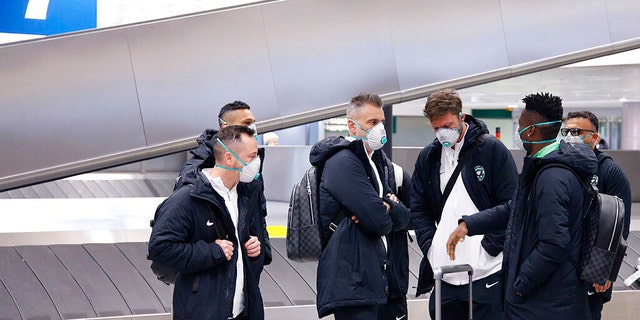
Members of Bulgarian soccer team Ludogorets are seen wearing protective face masks at Malpensa airport in Milan, Italy, ahead of their Europa League soccer match on Feb. 27.

Members of Bulgarian soccer team Ludogorets are seen wearing protective face masks at Malpensa airport in Milan, Italy, ahead of their Europa League soccer match on Feb. 27. (Ludogorets FC via AP)

On Thursday, both United Airlines and American Airlines issued similar waivers for travel to Italy.

United will waive change fees for travelers scheduled to fly to the following destinations: Bologna (BLQ), Genoa (GOA) Milan (BGY, LIN or MXP), Trieste (TRS), Turin (TRN), Venice (VCE) or Verona (VRN). Ticketholders wishing to change flights must be scheduled to fly by April 30, and willing to reschedule travel for before June 30. Those who wish to reschedule for later, or change their departure or destination, may reschedule for one year from the date their tickets were issued without incurring a change fee, although fare differences will apply. Find more information at United.com.

CLICK HERE TO SIGN UP FOR OUR LIFESTYLE NEWSLETTER

American Airlines, too, offered change-fee waivers for passengers scheduled to travel to Bologna (BLQ), Florence (FLR), Milan (BGY, LIN or MXP), Naples (NAP), Pisa (PSA), Turin (TRN), Venice (VCE) or Verona (VRN). Eligible passengers must be scheduled to fly by March 15, and be able to reschedule travel departing before April 3. Passengers wishing to further delay or cancel may also be eligible for fee waivers. Find more information at AA.com.

CLICK HERE FOR COMPLETE CORONAVIRUS COVERAGE

As of Friday, the novel coronavirus had claimed the lives of 15 in Italy, and infected more than 650 in the country. The virus has so far killed over 2,800 around the globe and sickened more than 83,000.

Let's block ads! (Why?)


https://news.google.com/__i/rss/rd/articles/CBMiV2h0dHBzOi8vd3d3LmZveG5ld3MuY29tL3RyYXZlbC9hbWVyaWNhbi1kZWx0YS11bml0ZWQtYWlybGluZXMtd2FpdmVycy1pdGFseS1jb3JvbmF2aXJ1c9IBAA?oc=5

2020-02-28 15:40:49Z
52780635869565

Market corrections are scary but also, in some cases, necessary - msnNOW

After six days of being pounded by a virus-induced, global sell-off, U.S. markets hit a milestone this week.

FILE - In this Thursday, Feb. 27, 2020, file photo, stocks reflect declines on monitors as people work on the floor of the New York Stock Exchange. The S&P 500 has lost more than 10% from its record high as worries have built that a fast-spreading new virus will slam economies and corporate profits around the world. That means stocks just went through a “correction” in the stilted parlance of market watchers. (AP Photo/Craig Ruttle, File): FILE - In this Thursday, Feb. 27, 2020, file photo, stocks reflect declines on monitors as people work on the floor of the New York Stock Exchange. The S&P 500 has lost more than 10% from its record high as worries have built that a fast-spreading new virus will slam economies and corporate profits around the world. That means stocks just went through a “correction” in the stilted parlance of market watchers. (AP Photo/Craig Ruttle, File) © Provided by Associated Press FILE - In this Thursday, Feb. 27, 2020, file photo, stocks reflect declines on monitors as people work on the floor of the New York Stock Exchange. The S&P 500 has lost more than 10% from its record high as worries have built that a fast-spreading new virus will slam economies and corporate profits around the world. That means stocks just went through a “correction” in the stilted parlance of market watchers. (AP Photo/Craig Ruttle, File)

The S&P 500 has dropped more than 10% from the record highs set just over a week ago as a fast-spreading new virus raises the specter of damaged economies and tumbling sales for companies in the U.S., Asia, Europe and elsewhere.

Loading...

Load Error

The S&P just went through a correction.

While that can be scary, particularly when a sell-off happens as fast as it did this week, corrections are fairly regular occurrences in the stock market. A correction can be a healthy event, eliminating excesses that have built up after extended runs of market optimism.

The stock market is still in the midst of its longest bull run on record, which began in March 2009 out of the ashes of the financial crisis.

The fear is that this correction may turn into another bear market: a drop of at least 20%.

Here's a look at what history shows about past corrections, and what market watchers are expecting going forward.

Q: HOW OFTEN DO CORRECTIONS OCCUR?

A: Every couple years, on average. Even within this nearly 11-year-long bull run for U.S. stocks, the S&P 500 has stumbled to five corrections prior to this one, according to CFRA. In some, the market came within a breath of falling into a bear market, including a 19.8% fall in late 2018.

But each time, stocks regained their footing and resumed climbing again.

This is the 24th time in the last 50 years that the S&P 500 has fallen at least 10%, including both bear markets and milder corrections.

Q: DO THEY ALWAYS HAPPEN SO FAST?

A: No, this one has been particularly swift. Looking only at corrections since World War II, not at bear markets, it's taken an average of 76 days for the S&P 500 to lose 10%, according to CFRA.

The S&P 500 has dropped 12% in a little more than a week.

Q: WHAT USUALLY HAPPENS AFTER A DROP LIKE THIS?

A: Looking only at corrections that managed to right themselves before turning into a bear market, the S&P 500 has taken an average of 135 days to find a bottom and lost 14% along the way, according to CFRA. But the ensuing recoveries have often been quick, and the index has taken an average of 116 days to recoup all its losses.

For declines that metastasize into bear markets, the damage is much worse. Going back to 1929, the average bull market has taken an average of 21 months to complete and brought with it a loss of nearly 40% for the S&P 500, according to S&P Dow Jones Indices.

Q: WHAT CAUSED THE LAST CORRECTION?

A: In late 2018, when investors were worried that the Federal Reserve was raising interest rates too quickly and could force the economy into a recession. They were also worried about the U.S.-China trade war, which was running hot at the time.

Q: WHAT HAPPENED AFTER THAT?

A: After hitting a bottom on Dec. 24, 2018, the stock market rocketed to one of its best years in decades. The S&P 500 returned 31.5% in 2019, including dividends.

The Federal Reserve halted its rate increases and cut rates three times last year, the first such cuts in more than a decade. Investors see low rates as steroids for stocks because they can boost profits, while also making rival investments such as bonds less attractive.

Q: WHAT'S THE FED DOING NOW?

A: The Fed has been on hold since last fall, but traders are increasingly betting that it will have to cut rates again soon to prop up the economy.

Expectations for such aid from China's central bank and others around the world helped stocks hold up in the first few weeks of the virus outbreak. But doubts are rising now about how effective lower interest rates can be when the problem is people getting sick around the world.

Q: SO HOW BAD CAN THIS GET?

A: No one knows.

Medical experts can't say how far the virus will spread and what its ultimate toll will be. With so much uncertainty, investors are left to guess how many factories will be shut, how many customers of companies will be quarantined and by how much corporate profits will ultimately be shorn. In the face of so much uncertainty, the impulse has been to sell stocks now and run to the safety of U.S. government bonds instead.

Some experts say the market was already primed for a decline, even before the threat of the virus escalated.

Stocks had become expensive, particularly when compared with how much profit companies are producing, leaving them more risky and vulnerable. Doug Ramsey, chief investment officer of the Leuthold Group, said he was also unnerved by recent signs of over-confidence in some corners of the market by retail investors.

“We could have had this size of a drop based on sentiment alone, without the coronavirus,” he said. “This could not have come at a worse time.”

Let's block ads! (Why?)


https://news.google.com/__i/rss/rd/articles/CBMifGh0dHBzOi8vd3d3Lm1zbi5jb20vZW4tdXMvbW9uZXkvbWFya2V0cy9tYXJrZXQtY29ycmVjdGlvbnMtYXJlLXNjYXJ5LWJ1dC1hbHNvLWluLXNvbWUtY2FzZXMtbmVjZXNzYXJ5L2FyLUJCMTB1WDdYP2xpPUJCbmJmY07SAQA?oc=5

2020-02-28 15:00:00Z
52780637805329

These are the only 7 stocks in the S&P 500 that rose while the market plunged - MarketWatch

Deep Dive

By Philip van Doorn

Published: Feb 28, 2020 9:39 am ET

The company whose stock has risen the most is working on drug trials to fight COVID-19

Gilead Sciences is holding drug trials to see if its Remdesivir medication is effective against the COVID-10 virus.

Gilead Sciences is holding drug trials to see if its Remdesivir medication is effective against the COVID-10 virus.

In any market environment, there are exceptions to the trend. But there aren’t many this time.

Since the S&P 500 SPX-3.41%  hit its last closing record on Feb. 19, the index has skidded 12% — and only seven of the component stocks haven’t declined through the close on Feb. 27. See the list below.

Before you get there, here’s a list of stocks in the index that took the worst beatings, along with a summary of how the 11 sectors performed.

It might surprise you that Tesla TSLA-7.5%  isn’t on that list of decliners, but the electric car maker hasn’t yet met the requirements to be included in the S&P 500. Before the outbreak of the coronavirus strain known as COVID-19, it appeared likely to be added to the index by the end of 2020. Tesla’s stock was down nearly $100 (13%) on Feb. 27 to close at $679. The stock was down $238 (26%) since it set a closing record of $917.42 on Feb. 19.

Read: Tesla’s stock tumbles toward biggest-ever weekly drop

So here are the exceptions — seven S&P 500 stocks that rose in price between Feb. 19 and Feb. 27:

Company Ticker Industry Price change since Feb. 19 Price change - 2020 Decline from 52-week high Price change - 2019
Gilead Sciences Inc. GILD-6.49% Biotechnology 7.9% 11.8% -7.9% 3.9%
Regeneron Pharmaceuticals Inc. REGN-1.9% Biotechnology 7.7% 14.9% -8.2% 0.5%
Clorox Co. CLX-5.99% Household/Personal Care 2.3% 9.9% -3.1% -0.4%
E-Trade Financial Corp. ETFC-2.98% Investment Banks/Brokers 2.3% 1.3% -19.8% 3.4%
CME Group Inc. Class A CME-5.51% Investment Banks/Brokers 1.4% 4.8% -6.6% 6.7%
Newmont Corp. NEM-7.82% Precious Metals 0.8% 7.1% -9.4% 25.4%
Cboe Global Markets Inc. CBOE-4.81% Investment Banks/Brokers 0.7% 1.0% -5.2% 22.7%
Source: FactSet

You can click the tickers for more about each company.

• Gilead Sciences GILD-6.49%  has announced two Phase 3 clinical studies to measure the effectiveness of its Remdesivir medication in countering COVID-19 infections. The company’s Feb. 26 press release has more details. Jefferies analyst Michael Yee rates Gilead a “buy,” but wrote in a note to clients on Feb. 26 that although he is pleased that fighting the virus is a ‘very high priority” for Gilead’s management, “the financial implications are modest (pricing, one-time use, no tail).”

• Regeneron Pharmaceuticals REGN-1.9%  ws upgraded to a “Buy” by Jefferies analyst Biren Amin on Feb. 25, because he believes competitive risk to the company’s Eylea macular degeneration therapy has been minimized because of safety concerns over Novartis AG’s NVS-2.74% CH:NOVN-4.91%  Beovu medication.

• Clorox CLX-5.99%  is an obvious defensive stock during a time when people are concerned about the spread of a deadly virus and reaching for bleach. But Charles Lemonides, founder of ValueWorks LLC in New York, argued that for long-term investors, Clorox’s high valuation to earnings actually makes it a risky stock.

• E-Trade Financial ETFC-2.98%  agreed on Feb. 20 to be acquired by Morgan Stanley MS-2.9%  in an all-stock deal valued at $58.74 a share at that time. E-Trade’s shares closed at $45.95 Thursday. The deal calls for an exchange of 1.0432 Morgan Stanley shares for every E-Trade share. Morgan Stanley’s shares closed at $45.41 on Feb. 27, so based on those numbers, E-Trade’s takeout price would be $47.37.

Create an email alert for Philip van Doorn’s Deep Dive columns here.

See original version of this story

Let's block ads! (Why?)


https://news.google.com/__i/rss/rd/articles/CBMiT2h0dHBzOi8vd3d3Lm1hcmtldHdhdGNoLmNvbS9hbXAvc3RvcnkvZ3VpZC8wMEYyQ0U3OC01QTJGLTExRUEtQUFCNy0zNUNCQ0RDOEUyMjLSAU9odHRwczovL3d3dy5tYXJrZXR3YXRjaC5jb20vYW1wL3N0b3J5L2d1aWQvMDBGMkNFNzgtNUEyRi0xMUVBLUFBQjctMzVDQkNEQzhFMjIy?oc=5

2020-02-28 14:39:00Z
52780637805329

Dow drops 800 at open, extending worst week since financial crisis - MSNBC

The stock market cratered again on Friday, marking the seventh day of a massive sell-off sparked by rising fears about the coronavirus epidemic. The Dow Jones Industrial Average plunged by 800 points at the opening bell, with the S&P 500 and the Nasdaq each falling by 3 percent.

Let's block ads! (Why?)


https://news.google.com/__i/rss/rd/articles/CBMieWh0dHBzOi8vd3d3Lm1zbmJjLmNvbS9zdGVwaGFuaWUtcnVobGUvd2F0Y2gvZG93LWRyb3BzLTgwMC1hdC1vcGVuLWV4dGVuZGluZy13b3JzdC13ZWVrLXNpbmNlLWZpbmFuY2lhbC1jcmlzaXMtNzk2MDk5MjU4NDHSATVodHRwczovL3d3dy5tc25iYy5jb20vbXNuYmMvYW1wLXZpZGVvL21tdm83OTYwOTkyNTg0MQ?oc=5

2020-02-28 14:59:03Z
52780630255565

5 things to know before the stock market opens Friday - CNBC

1. Dow set to sink again after biggest point-loss ever

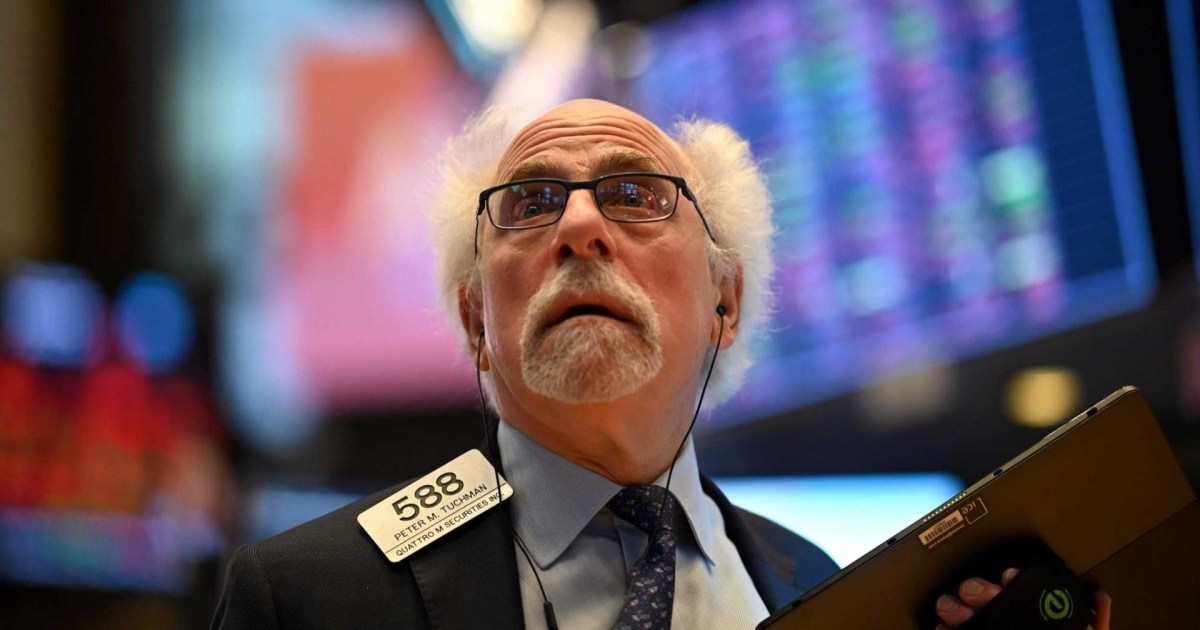
Traders work during the opening bell at the New York Stock Exchange (NYSE) on February 27, 2020 at Wall Street in New York City.

Johannes Eisele | AFP | Getty Images

U.S. stock futures were pointing to a 500-point decline for the Dow Jones Industrial Average at Friday's open on Wall Street, pushing blue chips further into a correction. Fears of a possible coronavirus pandemic crushed stocks this week, with the Dow off more than 11% and tracking for its worst weekly performance since the 2008 financial crisis. The Dow finished at a record high just 11 sessions ago on Feb. 12. As of Thursday's close, it was down nearly 13% since then. Thursday's nearly 4.4% decline for the Dow was the worst day back to February 2018. The Dow's nearly 1,200 point plunge Thursday was its worst point-loss ever.

2. 10-year Treasury yield collapses to another record low

Investors are dumping global stocks as well, with markets from Europe to Asia down 3% to 5%, and they're pouring money into the perceived safety of bonds. The 10-year U.S. Treasury yield, which moves inversely to price, hit another record low below 1.2%. The 10-year yield serves as a benchmark for mortgage rates, auto loans, student loans, credit card annual percentage rates and other debt instruments. The yields on the 2-year and 5-year Treasurys were trading below 1% early Friday. Global markets have lost $6 trillion in value over the past six days, according to S&P Dow Jones Indices.

3. Market expectations of Fed rate cut increasing

The carnage in stocks and plummeting Treasury yields are raising market expectations of a Federal Reserve interest rate cut. Ex-Fed Gov. Kevin Warsh told CNBC on Friday he sees a coordinated global central bank action soon in response to coronavirus. Before the outbreak, the Fed was telling the market it planned to hold rates steady for a while after three cuts of 0.25% each last year. A Fed official during the financial crisis in 2008, Warsh has been critical of Fed officials for not normalizing interest rates sooner and thus leaving themselves more room to act in times of crisis.

4. WHO warns coronavirus could reach every country

The World Health Organization on Friday reiterated its warning that COVID-19 could reach every country on Earth. On Tuesday, the WHO had warned countries around the world to be prepared for the coronavirus to be "literally knocking at the door." Infections continued to rise in hot spots outside of China — in South Korea, Iran, the U.K., Germany and Italy. The U.S. has about 60 cases. The vast majority of infections and deaths are still in China, where officials increased the count of confirmed cases to nearly 79,000, with fatalities approaching 2,800.

5. Biden looks to South Carolina and then Super Tuesday for comeback

Joe Biden leaving a campaign event in Georgetown, South Carolina on Feb. 26, 2020.

Tucker Higgins / CNBC

Heading into Saturday's South Carolina primary, former Vice President Joe Biden was leading in the polls after poor results in Iowa, New Hampshire and Nevada. A political action committee backing the embattled former front-runner for the Democratic presidential nomination invested in key Super Tuesday states. Biden is third so far in the delegate count, behind Sen. Bernie Sanders and Pete Buttigieg. Mike Bloomberg, a latecomer to the race, will be on ballots for the first time on Super Tuesday, when a third of the party's delegates are up for grabs.

Let's block ads! (Why?)


https://news.google.com/__i/rss/rd/articles/CBMiZGh0dHBzOi8vd3d3LmNuYmMuY29tLzIwMjAvMDIvMjgvNS10aGluZ3MtdG8ta25vdy1iZWZvcmUtdGhlLXN0b2NrLW1hcmtldC1vcGVucy1mZWJydWFyeS0yOC0yMDIwLmh0bWzSAWhodHRwczovL3d3dy5jbmJjLmNvbS9hbXAvMjAyMC8wMi8yOC81LXRoaW5ncy10by1rbm93LWJlZm9yZS10aGUtc3RvY2stbWFya2V0LW9wZW5zLWZlYnJ1YXJ5LTI4LTIwMjAuaHRtbA?oc=5

2020-02-28 12:33:00Z
52780630255565