Minggu, 04 September 2022

COVID-19 changed office work. Here's what the 'next normal' looks like as people return - CBC News

Deloitte Canada would have moved into a newly opened Vancouver office sooner, if it wasn't for the pandemic.

But the delay gave the company some time to consider how that space should be used.

"We were able to really think about this 'next normal,'" said Jayara Darras, the company's culture and people leader, which at Deloitte involves supporting hybrid working arrangements.

For now, about one-fifth of Deloitte's regional workforce of 1,500 people is in the building on a typical workday.

Deloitte Canada's local staff moved into the Deloitte Summit tower in Vancouver in June, a process that the company's culture and people leader says was delayed by the pandemic. But the delay gave the company time to think about how it wanted to use the space there. (Ben Nelms/CBC)

"We're hitting about 275, 300 people [on a given day]," Darras said, noting fewer people choose to come in on Mondays and Fridays.

She predicts that number to rise this fall, but also doesn't expect Deloitte to mandate a return.

The pandemic upended long-entrenched office routines, prompting organizations to rethink how work can be done and embrace more flexible arrangements.

More people are being encouraged to physically return to work this fall, but it doesn't appear the work world will revert to its pre-pandemic state. 

WATCH | Demand for flexibility, even in returning to the office:  

Workers want flexibility with return-to-office plans

6 months ago
Duration 5:13
With pandemic restrictions easing across Canada, companies are preparing to welcome employees back into the office. But many are pushing back and asking for flexible work arrangements, while others are looking forward to going into the office again.

"Work from home is clearly here to stay," Nicholas Bloom, a Stanford University economics professor, who has been studying the impact of the widening adoption of more flexible work, said via email.

Tentative start of a climb?

Colliers Canada manages more than 60 million square feet of commercial real estate across the country — with office space accounting for more than half of that footprint.

Amy Vuong, vice-president of strategy of real estate management services for Colliers Canada, says many companies began seeing people return to the office on a voluntary basis during the spring — and her organization is hearing that some companies are now making that in-the-office presence mandatory. (Submitted by Amy Vuong)

Amy Vuong, vice-president of strategy of real estate management services for Colliers Canada, said the firm has conducted regular surveys among its tenants throughout the pandemic.

This year, between spring and fall, Vuong said Colliers had seen "a four per cent increase in the number of companies that said they were moving to full-time" occupancy in the office — with staff going in five days a week — with that number moving from 33 to 37 per cent. 

That may seem like a tentative gain, but Vuong said it may be indicative of a larger trend.

"A lot of companies rolled out their [return-to-office] policies on a voluntary basis this spring," said Vuong.

"We're hearing that companies are potentially looking at removing that voluntary option as we go into the fall."

Cities and commuters

In Toronto, a lot of office desks are still going unused nearly 30 months into the COVID-19 era.

The Strategic Regional Research Alliance (SRRA), an independent research group, has been keeping tabs on the level of office occupancy in Canada's most-populous city. 

The Strategic Regional Research Alliance estimates the percentage of people coming into the office in Toronto is, as of last month, less than 30 per cent of its pre-COVID equivalent. (Evan Mitsui/CBC)

It estimates the proportion of people heading into these spaces — as of its most-recent snapshot from mid-August — is still less than 30 per cent of its pre-pandemic equivalent.

SRRA co-founder Iain Dobson expects that employers will want to see more people in the office this fall, if that's possible to achieve.

"We have had so many false starts," Dobson told CBC News in a telephone interview.

The Toronto Transit Commission expects a 10 to 15 per cent jump in ridership this fall, after students are back at school and "more people return to in-office work."

A file photo shows the exterior of Montreal's Côte-Vertu subway station. The Société de transport de Montréal expects to see more people taking transit this fall as students head back to school and more people head back to the office. (CBC/Radio-Canada)

That mirrors what Société de transport de Montréal is expecting.

"We are currently at 65 per cent of pre-pandemic level and we expect to get to 70 to 80 per cent this fall, mainly due to the return of workers and students," STM spokesperson Amélie Régis said in an email.

Many employees will be in the office 'more often' than now

Some notable large employers in Canada are pushing to bring more people back on-site this fall — though depending on their new working arrangements, those employees may not be going to the office every day.

Royal Bank of Canada, which has more than 60,000 employees based in Canada, is seeking to see leaders and staff in the office "more often" — with president and CEO Dave McKay making the case that people thrive from working together.

Royal Bank of Canada has more than 60,000 staff based in Canada. The company's president and CEO has indicated the organization wants to see its teams spending 'more time' in the office. (Evan Mitsui/CBC)

"We know that not all roles or teams are the same, and many types of work can be done productively at home or off-site," McKay wrote in a recent post on LinkedIn.

"At the same time, there's an energy and spontaneity that comes from connecting in-person that I don't believe technology can replicate."

At Canadian Tire, corporate staff working in hybrid roles have "no mandated 'office days' or a set number of days our employees are expected to be on-site," said Christopher Gray, the company's vice-president of culture and organizational design, in an emailed statement. 

Canadian Tire corporate staff who work in hybrid roles do not have a mandated number of days they must spend in the office, according to Christopher Gray, the company's vice president of culture and organizational design. (Chris Wattie/Reuters)

Even so, Canadian Tire has invested in "new technology, modern amenities and collaboration spaces" and believes its employees "will continue to gather more frequently in person," he said.

The federal government, which employs more than 300,000 public servants, also intends to see more people stepping foot inside its facilities — and the Treasury Board of Canada Secretariat says this process has been underway, for various departments, since the spring. 

In an email, the board said "the Government of Canada has been testing new hybrid models with a view to full implementation in the fall" as public health considerations permit.

Unions representing public servants have expressed concerns about this plan.

'No real justification'

Greg Phillips, president of the Canadian Association of Professional Employees, said the government has not made a clear enough case as to why more time in the office is needed — and it hasn't indicated there's a problem with the work that public servants are doing from home either.

"No real justification is being brought forward," said Phillips, whose union represents 23,000 members including government economists, translators and interpreters.

Stanford University's Bloom has been part of a large effort to examine people's experiences working from home during the pandemic.

And the research is pointing to a future where workers want to retain the flexibility they have been accustomed to over the past two-and-a-half years.

A February 2022 survey involving more than 20,000 participants around the globe, indicated 15 per cent of these respondents would quit their jobs if they were forced to be back at work five days a week.

An even-higher proportion of Canadians — nearly 22 per cent — felt that way.

"Canada has, like the U.S., a highly developed economy with a high number of professional jobs that can [be] done remotely, a highly educated workforce and many people living a long commute from work," said Bloom.

Adblock test (Why?)


https://news.google.com/__i/rss/rd/articles/CBMiUWh0dHBzOi8vd3d3LmNiYy5jYS9uZXdzL2J1c2luZXNzL2NhbmFkYS1yZXR1cm4tb2ZmaWNlLXdmaC1mYWxsLXBhbmRlbWljLTEuNjU3MDU3NdIBAA?oc=5

2022-09-04 11:20:13Z
CAIiEEGx_kM7Oz4leJI_EwyakFMqFggEKg4IACoGCAowqKNmMKjdCjDBjx0

Sabtu, 03 September 2022

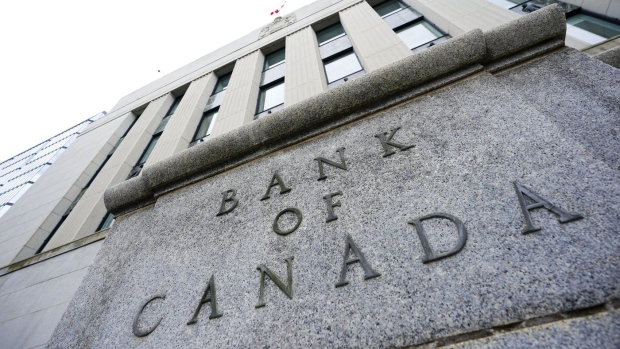
Bank of Canada expected to raise interest rate for fifth time at pivotal moment for economy - CP24


Nojoud Al Mallees, The Canadian Press
Published Saturday, September 3, 2022 2:32PM EDT

OTTAWA - Inflation appears to have peaked but it's still running hot and a supersized rate hike from the Bank of Canada next week is widely expected.

Some economists think Wednesday's hike could be the last for a while.

“We think that by the time October comes around, we might be in a good enough position for the bank to take a pause and look at how the economy is reacting,” said Karyne Charbonneau, CIBC's executive director of economics.

The September rate call comes at a crucial time for Canada's economy.

As gas prices fell, the year-over-year inflation rate sat at 7.6 per cent in July, down from 8.1 per cent in June. Second-quarter GDP grew compared with the first three months of the year, though that slowed toward the end of the period and a preliminary estimate suggests a contraction in July. Meanwhile, the unemployment rate is holding at a historic low.

Despite the drop in the inflation rate, Bank of Canada Governor Tiff Macklem said in an Aug. 16 op-ed that nearly 40-year high inflation was still a major concern.

“Inflation in Canada has come down a little, but it remains far too high,” Macklem wrote. “We know our job is not done yet - it won't be done until inflation gets back to the two per cent target.”

Some of Canada's major banks are forecasting the central bank will raise the key interest rate by three-quarters of a percentage point, bringing it to 3.25 per cent.

In a closely watched speech last week, U.S. Federal Reserve Chair Jerome Powell delivered a stark message on its own rate hike cycle, saying the Fed will likely impose more large interest rate hikes in coming months. His message that the U.S. central bank will stay aggressive on interest rates had some observers speculating that the Bank of Canada hike on Sept. 7 could even be a full percentage point.

The bank hiked its key rate in July by a full percentage point - the largest single rate increase since August 1998 after a series of hikes that began in March. Previously, the rate had been at 0.25 per cent where it sat since it was slashed to near-zero early in the pandemic.

Higher interest rates feed into higher lending rates across the economy, making it more expensive for Canadians and businesses to borrow money. The central bank is hoping that by making the cost of debt more expensive, spending in the economy will slow and inflation will cool.

However, senior economist David Macdonald at the Canadian Centre for Policy Alternatives warns the rapid pace of the hikes could have serious repercussions because of the high level of business and household debt in the economy.

In his latest analysis, Macdonald said private sector debt amounts to 225 per cent of the country's gross domestic product. By comparison, the last time the bank raised interest rates this rapidly was in 1995, when private sector debt stood at 142 per cent of GDP.

That higher level of debt, he says, will make it harder to achieve the bank's desired “soft landing,” where interest rate hikes bring inflation down without triggering a recession.

“What I really wanted to bring out in this analysis was the fact that private sector debt is much higher today than it was in the 1980s 1/8 and 3/8 1990s and previous times that we've seen this kind of rapid rate increase,” said Macdonald. “And why this matters, of course, is that it's not just the interest rate that matters, the interest rate is charged on something. It's charged on private sector debt.”

Macdonald has been calling for alternative solutions to cool inflation using federal government rather than central bank policy.

Some of his recommendations include changing mortgage underwriting rules for investors to cool housing prices and expanding the new excess corporate profits tax beyond financial institutions.

However, Christopher Ragan, McGill University's Max Bell School of Public Policy, said the central bank is best-suited to take on the responsibility of maintaining low interest rates.

“There's very, very good reasons why we have operationally independent central bank trying to target inflation rather than governments, because governments in the past have done a very poor job at that,” he said.

Ragan said the independence of the Bank of Canada allows it to act forcefully in the face of inflation, while any government intervention would be highly political. Nevertheless, Ragan says bringing inflation down with interest rate hikes is painful.

“That's actually why it's so important to never let inflation get high in the first place,” said Ragan. “Because it's not just that high inflation is bad, it's that reducing high inflation back down to low inflation hurts a lot.”

This report by The Canadian Press was first published Sept. 2, 2022.

Adblock test (Why?)


https://news.google.com/__i/rss/rd/articles/CBMif2h0dHBzOi8vd3d3LmNwMjQuY29tL25ld3MvYmFuay1vZi1jYW5hZGEtZXhwZWN0ZWQtdG8tcmFpc2UtaW50ZXJlc3QtcmF0ZS1mb3ItZmlmdGgtdGltZS1hdC1waXZvdGFsLW1vbWVudC1mb3ItZWNvbm9teS0xLjYwNTQ3MDbSAQA?oc=5

2022-09-03 18:32:34Z
1552213075

What protection to expect from updated COVID vaccines this fall - CBC News

Subscribe to Second Opinion for a weekly analysis of health and medical science news.


Canada has just approved an updated COVID-19 vaccine to target the first highly contagious Omicron variant, with doses expected to start rolling out within days. But what exactly can we expect from these new shots when they land in the real world? 

The updated Moderna vaccine is a combination of two strains, also known as a "bivalent" vaccine, that targets both the original virus and the Omicron variant BA.1 that emerged late last year and drove the largest wave of infection and hospitalization in the pandemic.

While the new shot doesn't directly target dominant Omicron subvariants BA.4 and BA.5, which the U.S. approved an updated shot for this week, Pfizer submitted an application for Health Canada approval for its BA.4-5 vaccine Friday and Moderna is expected to soon.

"The evidence we have to date shows that the bivalent vaccine with BA.1 offers good protection against BA.4 and BA.5," Deputy Chief Public Health Officer Dr. Howard Njoo said during a technical briefing Thursday.

"Certainly as the situation evolves we'll have to look at the evidence and see what happens with real-world effectiveness."

But what an updated booster can do for you depends on how vulnerable your immune system is, whether you're one of the millions of Canadians who've recently been infected with COVID and when you last had a vaccine. 

WATCH | Health Canada approves updated vaccine targeting Omicron variant: 

Vaccine for Omicron variant approved by Health Canada

1 day ago

Duration 2:52

Health Canada has approved a new bivalent COVID-19 vaccine from Moderna, which targets the Omicron variant. It's the first vaccine of its type in Canada, but officials say another batch of booster shots, specifically targeting Omicron's BA.4 and BA.5 subvariants, could arrive later this fall.

Will updated vaccines stop COVID spread?

Infectious diseases experts, virologists, epidemiologists and immunologists are hopeful updated vaccines will be more effective at preventing transmission than the original shots — at least initially — but also caution Canadians not to expect them to be a silver bullet. 

With limited data on the impact these vaccines will have, all eyes will be on the effect they have on slowing rates of infection and transmission and whether they better protect vulnerable groups in the population heading into the fall and winter months.

"We do not know what the impact is because that is not available," Chief Public Health Officer Dr. Theresa Tam said during a news conference Thursday when asked by CBC News how effective the updated vaccines will be at stopping the spread of the virus. 

Chief Public Health Officer Theresa Tam said she is hopeful that the new bivalent vaccine boosts protection against infection and transmission, at least through the fall. (Adrian Wyld/The Canadian Press)

Tam said she is hopeful that the new bivalent BA.1-targeted vaccine from Moderna boosts protection against infection and transmission — at least through the fall.

Clinical trial data on the BA.1-targeted vaccines from Moderna and Pfizer-BioNTech suggests they provide slightly stronger immune protection against Omicron than the original vaccines, but exactly what that translates to in the real world remains to be seen.

"The immune responses to these variant-tuned boosters are modestly encouraging, but we are still waiting for definitive clinical evidence," said Dr. David Naylor, who co-chairs the federal government's COVID-19 Immunity Task Force.

"That said, even if their marginal advantages are small, they could have a meaningfully positive impact if their novelty rekindles public interest in getting boosted." 

A new preprint modelling study, that has not been peer reviewed, suggested that updated vaccines may not be much more effective than existing boosters in a population with hybrid immunity from vaccination and infection — especially when it comes to protection against severe illness.

But that could still lead to significant protection at a population level, with the preprint also suggesting that for every 1,000 people vaccinated with an updated booster, an average of eight fewer people would be hospitalized compared with the original vaccines. 

"We don't know yet the magnitude of this improvement, but it will likely be pretty limited," said Dr. Gaston De Serres, an epidemiologist at the Quebec National Institute of Public Health (INSPQ). 

"Especially against severe outcomes like hospitalization for which, up until now, the original [vaccines] have been quite successful."

What can updated COVID vaccines do for you?

More than half of Canadians have been infected with COVID since the emergence of Omicron and its highly contagious subvariants, and the added protection from prior infection in a vaccinated population appears to be providing an edge. 

A new research letter published in the New England Journal of Medicine looked at the risk of BA.5 infection among people in Portugal who had a prior infection with past variants, including BA.1 and BA.2, and found they had strong protection against the newer variant. 

That's in part because Portugal has such high levels of vaccination, with more than 98 per cent of the population studied having at least two doses, meaning that much like in Canada our high levels of two-dose vaccination and infection provide strong immune protection.

Two Canadian preprint studies from May and June, which have not been peer reviewed, also found prior Omicron infections provided robust immunity against future reinfection and hospitalization — especially when combined with vaccination.

"In general, we can anticipate that those who have hybrid immunity are going to be better protected," said Dr. Danuta Skowronski, a vaccine effectiveness expert and epidemiology lead at the B.C. Centre for Disease Control and co-author of the preprints. 

"And it is also true that vaccine strains that are a better match to the circulating variant will likely provide better protection."

The longer you wait after your last infection or vaccination is also important to consider, with emerging evidence suggesting getting a booster too closely after being infected or vaccinated can impact how effective the shot is.

A new small preprint study, which has not been peer reviewed, found that getting a booster within two months of an infection could negatively impact B cells that help generate immune protection against severe disease.

NACI recommends waiting three months after an infection before getting another shot, and three to six months between doses, but also said in its most recent guidance that anyone at high risk of severe COVID in Canada should be offered a fall booster. 

"Timing is everything and in general the recommendations are to wait a few months following infection before receiving a booster dose," Skowronski said. 

She added that people shouldn't immediately rush out to get a booster after infection because it could actually interfere with the immune response.

Updated vaccines 'will help,' but not a 'miracle'

Canada still has a "worrisome gap" in third dose coverage, Naylor said, with less than half of Canadians having received a booster even though it provides significant added protection against severe COVID-19. Only about 12 per cent have received a fourth dose. 

"As we start to head into the fall and we start to see almost certainly cases rise again, the updated booster is definitely going to be better than not getting a booster at all," said Deepta Bhattacharya, an immunobiology professor at the University of Arizona. 

"Given that BA.5 is still circulating, I don't see that there's really any downside at all to picking up these boosters and they'll probably work better than just another shot of the original."

Less than half of Canadians have received a booster even though it provides significant added protection against severe COVID-19. Only about 12 per cent have received a fourth dose. (Darryl Dyck/The Canadian Press)

Bill Hanage, an epidemiologist at Harvard's T.H. Chan School of Public Health in Boston, said it's important to consider that even though the original vaccines were far from an exact match to Omicron — they still provided strong protection against severe illness.

"But the closer matches now should do more," he said in an email. "Notably, there may well be a period following the shot when people are immune to infection."

Bhattacharya said the "big question" that is top of mind right now is how effective the updated vaccines will be at stopping transmission in the real world — and for how long.

"Do we start to restore some of the protection against any infection or symptomatic infection with these boosters? I expect we will," he said. "Exactly how long that effect will last, I think, is to be determined."

Dr. Allison McGeer, a medical microbiologist and infectious disease specialist at Toronto's Mount Sinai Hospital, said the updated shots may provide a slight boost in neutralizing antibodies that can prevent transmission — and that added protection is "not nothing." 

"An extra dose of the original vaccine results in substantial increased protection against BA.4 and BA.5. It's not perfect, but I think we're finding out nothing is perfect," she said. "The bivalent vaccines, they may be a little better, but they're not going to be a miracle."

Bhattacharya said that while clinical trials showed there is only about a twofold increase in protective antibodies against the BA.1, BA.4 and BA.5 variants targeted by Moderna and Pfiizer in their bivalent vaccines — it's still significant protection. 

"If you look at the data, it's a ton more antibodies that are being made," he said. "So I have every reason to expect that they will help — and probably help a lot."

Adblock test (Why?)


https://news.google.com/__i/rss/rd/articles/CBMiZmh0dHBzOi8vd3d3LmNiYy5jYS9uZXdzL2hlYWx0aC91cGRhdGVkLWNvdmlkLXZhY2NpbmVzLWNhbmFkYS1vbWljcm9uLWJpdmFsZW50LW1vZGVybmEtcGZpemVyLTEuNjU3MTE3N9IBAA?oc=5

2022-09-03 08:00:00Z
1553029625

Jumat, 02 September 2022

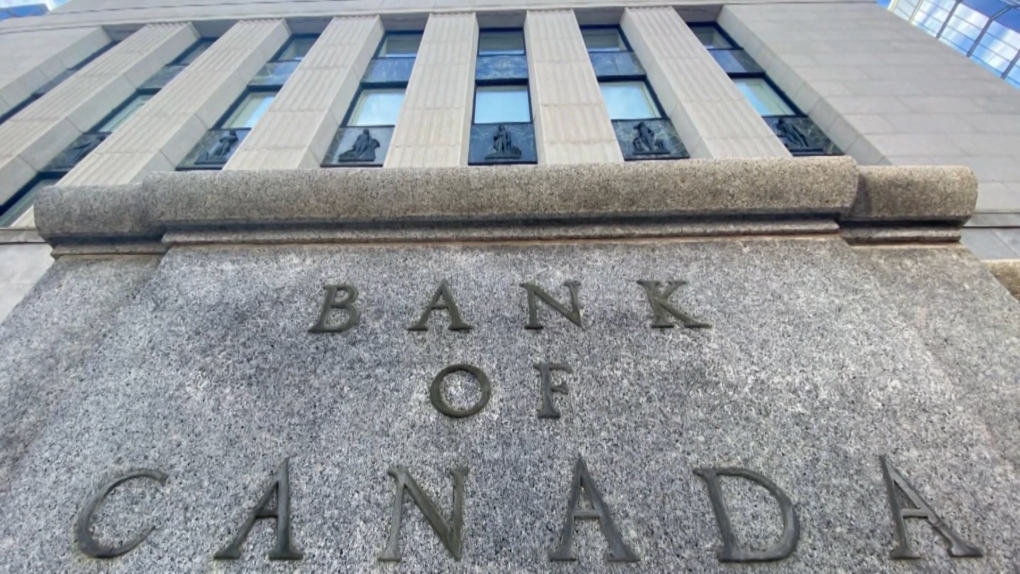
Interest rate in Canada expected to rise again - CTV News

Inflation appears to have peaked but it's still running hot and a supersized rate hike from the Bank of Canada next week is widely expected.

Some economists think Wednesday's hike could be the last for a while.

"We think that by the time October comes around, we might be in a good enough position for the bank to take a pause and look at how the economy is reacting," said Karyne Charbonneau, CIBC's executive director of economics.

The September rate call comes at a crucial time for Canada's economy.

As gas prices fell, the year-over-year inflation rate sat at 7.6 per cent in July, down from 8.1 per cent in June. Second-quarter GDP grew compared with the first three months of the year, though that slowed toward the end of the period and a preliminary estimate suggests a contraction in July. Meanwhile, the unemployment rate is holding at a historic low.

Despite the drop in the inflation rate, Bank of Canada Governor Tiff Macklem said in an Aug. 16 op-ed that nearly 40-year high inflation was still a major concern.

"Inflation in Canada has come down a little, but it remains far too high," Macklem wrote. "We know our job is not done yet -- it won't be done until inflation gets back to the two per cent target."

Some of Canada's major banks are forecasting the central bank will raise the key interest rate by three-quarters of a percentage point, bringing it to 3.25 per cent.

In a closely watched speech last week, U.S. Federal Reserve Chair Jerome Powell delivered a stark message on its own rate hike cycle, saying the Fed will likely impose more large interest rate hikes in coming months. His message that the U.S. central bank will stay aggressive on interest rates had some observers speculating that the Bank of Canada hike on Sept. 7 could even be a full percentage point.

The bank hiked its key rate in July by a full percentage point -- the largest single rate increase since August 1998 after a series of hikes that began in March. Previously, the rate had been at 0.25 per cent where it sat since it was slashed to near-zero early in the pandemic.

Higher interest rates feed into higher lending rates across the economy, making it more expensive for Canadians and businesses to borrow money. The central bank is hoping that by making the cost of debt more expensive, spending in the economy will slow and inflation will cool.

However, senior economist David Macdonald at the Canadian Centre for Policy Alternatives warns the rapid pace of the hikes could have serious repercussions because of the high level of business and household debt in the economy.

In his latest analysis, Macdonald said private sector debt amounts to 225 per cent of the country's gross domestic product. By comparison, the last time the bank raised interest rates this rapidly was in 1995, when private sector debt stood at 142 per cent of GDP.

That higher level of debt, he says, will make it harder to achieve the bank's desired "soft landing," where interest rate hikes bring inflation down without triggering a recession.

"What I really wanted to bring out in this analysis was the fact that private sector debt is much higher today than it was in the 1980s 1/8and 3/8 1990s and previous times that we've seen this kind of rapid rate increase," said Macdonald. "And why this matters, of course, is that it's not just the interest rate that matters, the interest rate is charged on something. It's charged on private sector debt."

Macdonald has been calling for alternative solutions to cool inflation using federal government rather than central bank policy.

Some of his recommendations include changing mortgage underwriting rules for investors to cool housing prices and expanding the new excess corporate profits tax beyond financial institutions.

However, Christopher Ragan, McGill University's Max Bell School of Public Policy, said the central bank is best-suited to take on the responsibility of maintaining low interest rates.

"There's very, very good reasons why we have operationally independent central bank trying to target inflation rather than governments, because governments in the past have done a very poor job at that," he said.

Ragan said the independence of the Bank of Canada allows it to act forcefully in the face of inflation, while any government intervention would be highly political. Nevertheless, Ragan says bringing inflation down with interest rate hikes is painful.

"That's actually why it's so important to never let inflation get high in the first place," said Ragan. "Because it's not just that high inflation is bad, it's that reducing high inflation back down to low inflation hurts a lot."

This report by The Canadian Press was first published Sept. 2, 2022.

Adblock test (Why?)


https://news.google.com/__i/rss/rd/articles/CBMiZ2h0dHBzOi8vd3d3LmN0dm5ld3MuY2EvYnVzaW5lc3MvYmFuay1vZi1jYW5hZGEtZXhwZWN0ZWQtdG8tcmFpc2UtaW50ZXJlc3QtcmF0ZS1mb3ItZmlmdGgtdGltZS0xLjYwNTMyNzHSAQA?oc=5

2022-09-02 15:26:00Z
1552213075

Health Canada Approves Moderna's COVID Vaccine That Protects Against Omicron Variant - VOCM

Health Canada has approved Moderna’s new COVID vaccine that offers greater protection against the Omicron variant.

The bivalent vaccine targets the original COVID-19 strain and the new Omicron variant.

To now, the highly contagious variant has been effective at bypassing the body’s immune response.

Health Canada’s Chief Medical Adviser Dr. Supriya Sharma says they are working at ensuring the best protection possible for all Canadians.

“To ensure they have as many options as possible for dealing with current and future variants,” says Sharma, “we have reached out to both Pfizer Biotech and Moderna to request that they file submissions for vaccines specifically targeting the BA.4 and BA.5 subvariants.”

She admits the virus is constantly mutating and the virus will always be one step ahead, but officials are closing the gap.

The federal government has already purchased 12 million doses of the new vaccine for distribution this fall.

Adblock test (Why?)


https://news.google.com/__i/rss/rd/articles/CBMiQWh0dHBzOi8vdm9jbS5jb20vMjAyMi8wOS8wMi9oZWFsdGgtY2FuYWRhLW1vZGVybmFzLWNvdmlkLXZhY2NpbmUv0gEA?oc=5

2022-09-02 09:09:00Z
1553029625

Kamis, 01 September 2022

GTA gas prices to drop ahead of long weekend - CP24

Gas prices in the Greater Toronto Area are expected to drop another two cents tomorrow ahead of the long weekend.

On Friday, prices at the pumps are slated to fall to $149.9 cents per litre across most of southern Ontario, according to President of Canadians for Affordable Energy Dan McTeague.

“If markets continue being as pessimistic, say almost as dysfunctional, as they are now, we could see $1.46, $1.47 for Sunday,” he told CP24 Thursday morning.

McTeague later said gas prices will see another drop on Saturday to $147.9 cents per litre.

Gas prices dipped seven cents overnight on Thursday to $151.9 cents per litre, the lowest since mid-January.

McTeague added that today’s prices are a notable drop from where they stood over two months ago.

“Wow, 66 cents down since you and I spoke back on June the 11th. So that's a $40 savings for consumers when they fill up 60, 70 litres so I'm a happy camper this morning,” McTeague said.

However, McTeague says the downward trend in prices likely won’t last long and will rise again in the coming weeks due to a variety of factors, including oil and gas supply concerns and rising interest rates.

“... the markets are completely in a bit of a funk. I don't think they know where to go. So they've decided to shut their positions. It's going to cause a rather dramatic, and as I said earlier, a very violent response in terms of much higher prices (which) is going to cause a lot of whiplash over the next several weeks,” he said.

Since late February, gas prices have been elevated partly due to fuel supply shortages amid Russia’s invasion of Ukraine.

Adblock test (Why?)


https://news.google.com/__i/rss/rd/articles/CBMiUGh0dHBzOi8vd3d3LmNwMjQuY29tL25ld3MvZ3RhLWdhcy1wcmljZXMtdG8tZHJvcC1haGVhZC1vZi1sb25nLXdlZWtlbmQtMS42MDUxMzcy0gEA?oc=5

2022-09-01 12:55:54Z
1541767535

Critics warn Ottawa's new 'luxury tax' on pricey cars, planes and boats could backfire - CBC News

Ottawa's luxury tax on high-priced cars, planes and boats is coming into effect today, despite warnings from some critics that the measure will hurt the economy and turn out to be more trouble than it's worth.

As of Thursday, luxury cars and personal aircraft with sale prices of over $100,000 and boats for personal use with price tags of more than $250,000 will be slapped with a 10 to 20 per cent tax.

The measure received final approval this past June and is expected to raise $163 million in new revenue per year

Deputy Prime Minister and Finance Minister Chrystia Freeland defended the tax Wednesday on the eve of its launch after touring a transportation facility in Calgary.

She cited the considerable sums Ottawa spent "to keep Canadians healthy and safe and to keep the economy going" during the COVID-19 pandemic before specifically mentioning the new tax.

Finance Minister and Deputy Prime Minster Chrystia Freeland defended the luxury tax during an ongoing tour of Alberta on Wednesday. (Bill Graveland/The Canadian Press)

"I think it is entirely reasonable to say to someone who has $100,000 to spend on a car or a plane, or $250,000 to spend on a boat, 'You need to pay a 10 per cent tax to help everybody else,'" Freeland said during a news conference following her tour.

"I think it is great for Canadians to be successful. It is great for Canadians to be prosperous. I also think that people who are doing really, really well should feel comfortable supporting everybody else."

Businesses ask: Why not RVs too?

Mark Delaney is director of sales and marketing at a Vernon, B.C., company that manufactures boats worth up to $500,000. He said the tax will undermine a boom in boat sales that began when people were stuck at home during the COVID-19 lockdowns.

Delaney said the tax is coming at a time when inflation is driving up the cost of parts for boats. He warned that the measure will harm tourism businesses and could make purchasers, many of whom are business owners themselves, think twice about buying.

WATCH | Critics fear new luxury tax could cost jobs: 

Ottawa’s new luxury tax more trouble than it's worth, critics say

11 hours ago
Duration 1:59
Starting this week, if you buy an expensive boat, plane or car in Canada, the federal goverment says you can afford to pay more. But critics of the levy say it could hurt the economy while not providing much benefit.

"They feel like they've paid more than their fair share in payroll taxes and everything else they do in their businesses every day," Delaney said. "And so to be hit ... with this tax is certainly not putting us in a very good light with the customer."

Both Delaney and Pat Sturgeon, who sells sailboats costing up to $700,000 in Mississauga, said it's unfair that other pricey items — such as RVs — are not being hit with the tax as well.

"A lot of my clients are not necessarily wealthy clients. In fact, most of them are just regular people trying to fulfil a dream," Sturgeon said. 

"The only thing I'm hoping is that the government will find out this tax is not working, it's not creating more revenue, it's actually costing them more money, that they'll end up scrubbing it."

Tax a 'loaded approach': economist

Don Drummond, a former federal assistant deputy minister of fiscal policy and a former chief economist for TD Bank, said the tax could spawn "cottage industries" around people trying to circumvent it. 

"Whatever you define as the threshold for a boat or whatever luxury good it is, somebody will do something to get around it," Drummond said. "That's a waste of the consumers' time. And it's a waste of the tax officials' time."

Don Drummond is a former assistant deputy minister of fiscal policy for the federal government. (Jovan Matic/CP)

The luxury tax will be a tough sell, he said, because — unlike a tobacco tax — it's not aimed at improving health outcomes. And there are already mechanisms to tax the wealthy, Drummond added.

"It's not like these items are particularly dangerous to individuals or to society," he said of high-priced boats, cars and aircraft. 

"The marginal tax rate on higher-income individuals is already over 50 per cent. If you wanted 60 or 70 per cent, that would be the way to do it.

"But [the luxury tax] is a loaded approach. It's not just saying, 'We want to have the better-off paying more tax.' We're saying we want them to pay more tax on very specific things, not even close to being all luxury goods."

Adblock test (Why?)


https://news.google.com/__i/rss/rd/articles/CBMid2h0dHBzOi8vd3d3LmNiYy5jYS9uZXdzL3BvbGl0aWNzL2x1eHVyeS10YXgtYm9hdHMtY2Fycy1wbGFuZXMtZmVkZXJhbC1nb3Zlcm5tZW50LXRha2UtZWZmZWN0LXNlcHRlbWJlci0xLTIwMjItMS42NTY4NDIx0gEA?oc=5

2022-09-01 08:00:15Z
CAIiEO4wagVlV0biFPkpvplPi6oqFggEKg4IACoGCAowqKNmMKjdCjDBjx0