Sabtu, 02 Oktober 2021

Another Tesla Record: 100 Fast Charging Superchargers In A Single City - CleanTechnica

Tesla is reportedly the only company that has achieved building 100 fast-charging stations in one single city. Tesla China announced through its social media that Tesla’s 100th Supercharger station and 1,000th Supercharger stall in Shanghai was officially in service. The video below from “JayInShanghai” notes that the 100th Supercharger Station is located in hot new Rafael Sky City.

On YouTube, he gave a bit of historical background about Tesla China Superchargers:

“In April 2014, Mainland China’s first Tesla Supercharger station was completed in Jinqiao, Shanghai. Over a seven-year period, Tesla has deployed 7,000 overcharged piles in Chinese mainland, bringing the total number of Supercharger stations to more than 900.

“With the completion and commissioning of Tesla’s Shanghai Supercharger Factory plant, Tesla’s infrastructure in China will be improved in the future, and more owners will enjoy hassle-free charging services. Tesla has built a full-scene charging network for ‘work, leisure, home and travel’ in Shanghai.

“Tesla China Charging Team announced in October Tesla will open another 10 Supercharger Stations in Shanghai at the same time. Stay tuned for more updates coming from China.

“Big thanks to Elle from Tesla China Marketing Team for the invitation. This was my first Tesla event and I have a feeling that this won’t be the last.”


Appreciate CleanTechnica’s originality? Consider becoming a CleanTechnica Member, Supporter, Technician, or Ambassador — or a patron on Patreon.


Advertisement
 
Have a tip for CleanTechnica, want to advertise, or want to suggest a guest for our CleanTech Talk podcast? Contact us here.

Adblock test (Why?)


https://news.google.com/__i/rss/rd/articles/CBMia2h0dHBzOi8vY2xlYW50ZWNobmljYS5jb20vMjAyMS8xMC8wMi9hbm90aGVyLXRlc2xhLXJlY29yZC0xMDAtZmFzdC1jaGFyZ2luZy1zdXBlcmNoYXJnZXJzLWluLWEtc2luZ2xlLWNpdHkv0gFvaHR0cHM6Ly9jbGVhbnRlY2huaWNhLmNvbS8yMDIxLzEwLzAyL2Fub3RoZXItdGVzbGEtcmVjb3JkLTEwMC1mYXN0LWNoYXJnaW5nLXN1cGVyY2hhcmdlcnMtaW4tYS1zaW5nbGUtY2l0eS9hbXAv?oc=5

2021-10-02 22:46:49Z
52781916167072

Pfizer submits trial data on vaccine use in children aged 5 to 11 to Health Canada - CP24 Toronto's Breaking News


Brett Bundale, The Canadian Press
Published Saturday, October 2, 2021 11:14AM EDT
Last Updated Saturday, October 2, 2021 11:14AM EDT

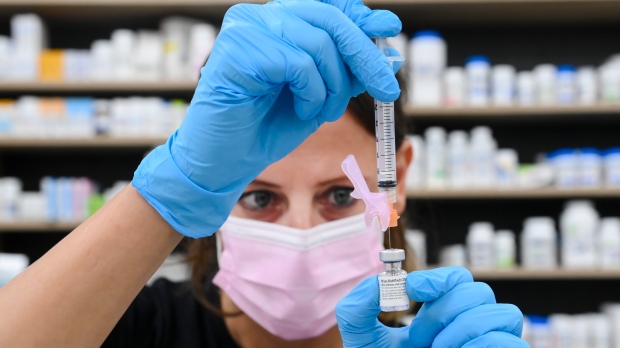
Pfizer has submitted preliminary research to Health Canada on the effectiveness of its COVID-19 vaccine in children aged five to 11.

The drugmaker confirmed Saturday it provided the initial trial data to the federal department for review as it prepares to make a formal submission seeking authorization to use the product in children.

Pfizer said its formal submission could come later this month.

Health Canada said in an email that Pfizer submitted the preliminary data for children aged five to 11 Friday afternoon, which was earlier than expected. The department said it expects the formal filing of the company's submission in mid-October.

Pfizer Canada spokeswoman Christina Antoniou said the submission will be a request for full authorization.

She said the new drug submission process for COVID-19 vaccines offers the same flexibility as the interim order authorization pathway did, including allowing the company to submit a rolling submission.

“In other words, 1/8 it's 3/8 not an emergency use authorization but a full approval under which we would continue to submit new data as it becomes available,” Antoniou said in an email.

Pfizer's vaccine was initially given the green light for use in Canada last December under an interim order authorization and received full approval last month.

The two-shot vaccine, developed in partnership with German pharmaceutical company BioNTech, is currently available for those aged 12 and older.

The company is testing a lower dose of the shots in children.

Pfizer and BioNTech said last week that researchers found the vaccine antibody responses in children were just as strong as those found in teenagers and young adults getting regular-strength doses.

The companies submitted the research to the U.S. Food and Drug Administration last week and plan to request emergency use authorization of their vaccine in children ages five to 11 “in the coming weeks.” The companies also plan to submit data to the European Medicines Agency and other regulators.

In addition, research involving even younger children is also taking place.

Pediatric studies evaluating the safety and efficacy of Pfizer's COVID-19 vaccine in children aged six months to age five is ongoing, with initial results expected before the end of the year, Antoniou said.

Meanwhile, Health Canada approved the use of Moderna's COVID-19 vaccine in kids as young as 12 in late August.

The American drugmaker is also in the midst of vaccine trials for children younger than 12, with results expected sometime this fall.

This report by The Canadian Press was first published Oct. 2, 2021.

- With files from The Associated Press.

Adblock test (Why?)


https://news.google.com/__i/rss/rd/articles/CBMidmh0dHBzOi8vd3d3LmNwMjQuY29tL25ld3MvcGZpemVyLXN1Ym1pdHMtdHJpYWwtZGF0YS1vbi12YWNjaW5lLXVzZS1pbi1jaGlsZHJlbi1hZ2VkLTUtdG8tMTEtdG8taGVhbHRoLWNhbmFkYS0xLjU2MDg2NTnSAQA?oc=5

2021-10-02 15:14:00Z
52781893897785

Jumat, 01 Oktober 2021

What is the now-shuttered Ozy Media — and why did its COO pretend to be a YouTube exec? - CBC.ca

Media organization Ozy is shutting down less than a week after a story in the New York Times raised questions about its claims of millions of viewers and readers, while also pointing out a potential case of securities fraud.

The story triggered cancelled shows, an internal investigation, investor concern and high-level departures at the company.

Here's what you need to know about the company, what the New York Times story found and how it involves the company's chief operating officer pretending to be a YouTube executive.

What is Ozy?

Ozy was a media organization founded in 2013 and based in Mountain View, Calif., that published stories on its website, made podcasts, newsletters and shows and hosted the OzyFest festival. Its website remained up on Friday afternoon.

In a tweet, high-profile CEO and founder Carlos Watson — a former cable news anchor — claimed 25 million newsletter subscribers and more than 30 million views on YouTube.

However, its claim of a large audience has long been regarded as something of a mystery. Industry insiders said on Twitter that they'd never read or come across an Ozy story.

U.S. rapper Common performs onstage at OzyFest in New York City in July 2018. (Brad Barket/Getty Images for Ozy Media)

What did the NYT report?

Ozy has seen a snowballing crisis after a New York Times story earlier this week said the company's chief operating officer, Samir Rao, impersonated a YouTube executive on a call with Goldman Sachs while attempting to raise money from the investment bank, a potential case of securities fraud.

It also addressed long-held industry questions of whether Ozy was inflating its audience size.

In the story published Sunday, Marc Lasry — the hedge-fund billionaire and co-owner of the NBA's Milwaukee Bucks who was named Ozy chairman last month — was quoted as saying the board was aware of the February incident. He called it an "unfortunate one-time event," and supported how it had been handled.

Watson told the Times that the incident was the result of Rao having a mental health crisis, but that he had taken time off and then come back to work.

Carlos Watson is seen at OzyFest in New York City in July 2018. Watson, who founded Ozy in 2013, claimed the company had 25 million newsletter subscribers and more than 30 million views on YouTube. (Matthew Eisman/Getty Images for Ozy Media)

What was the aftermath?

But the story's impact has been explosive in the media industry.

A high-profile employee, former BBC anchor Katty Kay, resigned earlier in the week, and an early investor, a venture capital firm, gave up its Ozy shares. The board had reportedly hired a law firm to review Ozy's business activities.

Cable network A&E pulled a special on mental health hosted by Watson that was scheduled for Monday night, and Watson stepped down from hosting a documentary Emmys awards show Wednesday night.

Katty Kay is seen in Washington in April 2012. The former BBC anchor resigned from Ozy earlier this week. (Kris Connor/Getty Images)

The website Crunchbase, which tracks corporate fund-raising, said Ozy had raised more than $70 million US from investors as of late 2019.

On Friday, shortly before the company shut down, Lasry also stepped down.

An emailed statement Friday from Ozy Media's board called it a company with many "world-class journalists and experienced professionals to whom we owe tremendous gratitude."

The statement said it was "with the heaviest of hearts that we must announce today that we are closing Ozy's doors." The board's statement did not give the reason that the company was shutting down.

Adblock test (Why?)


https://news.google.com/__i/rss/rd/articles/CBMiQ2h0dHBzOi8vd3d3LmNiYy5jYS9uZXdzL2VudGVydGFpbm1lbnQvb3p5LW1lZGlhLWV4cGxhaW5lci0xLjYxOTcxMTfSASBodHRwczovL3d3dy5jYmMuY2EvYW1wLzEuNjE5NzExNw?oc=5

2021-10-01 23:44:09Z
52781910660691

Merck's experimental COVID-19 pill under review by Health Canada - CTV News

TORONTO -- Health Canada says it is working with international counterparts to review an experimental pill from drugmaker Merck, which the company reports can reduce hospitalizations and deaths by half in patients sick with COVID-19.

During a news briefing Friday, the Public Health Agency of Canada (PHAC) said Merck first submitted an approval request for molnupiravir, a twice-daily oral antiviral agent taken within five days after the onset of symptoms, as a potential treatment for COVID-19 on Aug. 13.

According to PHAC, the submission was accepted under the Minister of Health's Interim Order, which allows for the review of "early safety, quality and efficacy data" while later-stage clinical trials take place

Canada's chief medical adviser Dr. Supriya Sharma said review of the treatment is ongoing as more data from trials becomes available. Sharma said Health Canada will make an approval decision only when all necessary evidence has been submitted and reviewed.

"We are looking at it. We're going through … the data," she said.

Sharma said Health Canada has no specific time for completion of the review as it can take "months," but also that the pill will be evaluated and "held to the standards" as any other medication or treatment.

According to Health Canada, it only authorizes treatments, including those for COVID-19, following a "thorough scientific review of the safety, efficacy and quality data."

"A treatment must show evidence that it works well, is of high quality and is safe. The available data must demonstrate that the treatment’s benefits outweigh its risks," the agency said in a statement.

Canada currently has four approved treatments for COVID-19, including Canadian-made COVID-19 monoclonal antibody bamlanivimab and antiviral medication remdesivir. However, these treatments require an IV or injection.

If cleared, molnupiravir would be the first oral pill shown to treat COVID-19.

Merck and its partner Ridgeback Biotherapeutics announced Friday that early results from its trials show that patients who received molnupiravir within five days of COVID-19 symptoms had about half the rate of hospitalization and death as those who received a placebo.

The study tracked 775 adults with mild-to-moderate COVID-19 who were considered to be at higher risk for severe disease because of health problems such as obesity, diabetes or heart disease. Among patients taking molnupiravir, 7.3 per cent were either hospitalized or died at the end of 30 days, compared with 14.1 per cent of those who recieved the placebo.

The results were so strong that an independent group of medical experts monitoring the trial recommended stopping it early.

"It really takes what is the devastating disease and hopefully gives people confidence that it can be manageable," Merck CEO Robert Davis said in an interview with CTV News.

Davis called the pill a "game-changer" that could potentially be used to treat non-hospitalized, less severe cases of COVID-19 from home.

Earlier study results from Merck showed the drug did not benefit patients who were already hospitalized with severe disease. Experts say this is expected, given that antiviral drugs are most effective before the virus ramps up in the body.

The study results have not been reviewed by outside experts, which is the usual procedure for vetting new medical research.

Merck said it plans to submit the data in the coming days to health officials in the U.S. and other countries to authorize the pill's use.

A decision from the U.S. Food and Drug Administration could come within weeks after that, and be distributed soon after.

Similar to other antivirals, molnupiravir works by interfering with the virus's ability to copy its genetic code and reproduce itself, a process known as excessive mutagenesis or "error catastrophe."

Virologists out of the University of Alberta (U of A) tested the compound to see its mechanism of action, independently of Merck. Their findings were published in May in the Journal of Biological Chemistry.

Matthias Gotte, a professor of medical microbiology and immunology at the U of A, led the research and said in an interview with CTV News that the drug attacks the virus, but doesn't block or inhibit its replication.

Gotte said molnupiravir changes the viral genome, causing the replication engine of the virus to make "sloppy copies" of these altered genomes that are useless and not viable.

While Merck only studied its drug in people who were not vaccinated, Gotte said it may also potentially work in vaccinated patients who get less severe, breakthrough COVID-19 infections.

However, Gotte said it is important to note that molnupiravir is not a replacement for vaccines.

"The principles are completely different. Vaccines, they prevent severe disease, and the drugs are used to treat," he said. "Once you are infected, the big problem is with these antiviral drugs you can't use them late, you have to use them as early as possible."

Eleanor Fish, a senior immunologist with the Toronto-based University Health Network who is not affiliated with the U of A study or Merck, says the approval of molnupiravir would help those who are ineligible for vaccination as well as those most at risk of severe disease.

"We can jump up and down in the U.S. and Canada and say, 'Hey, we've got another tool in our armoury,' [and] that's going to be great," Fish told CTV News.

She added that the drug's approval in other parts of the world will help countries that are struggling to acquire COVID-19 vaccines.

"I see this more as [an] incredible opportunity, with a limited number of vaccines available globally, to send this out to those jurisdictions where vaccination rates are very, very low," she said.

With files from The Associated Press

Adblock test (Why?)


https://news.google.com/__i/rss/rd/articles/CBMigAFodHRwczovL3d3dy5jdHZuZXdzLmNhL2hlYWx0aC9jb3JvbmF2aXJ1cy9oZWFsdGgtY2FuYWRhLXdvcmtpbmctdG8tcmV2aWV3LW1lcmNrLXMtZXhwZXJpbWVudGFsLWNvdmlkLTE5LXBpbGwtdHJlYXRtZW50LTEuNTYwNzg0M9IBRWh0dHBzOi8vYmV0YS5jdHZuZXdzLmNhL25hdGlvbmFsL2Nvcm9uYXZpcnVzLzIwMjEvMTAvMS8xXzU2MDc4NDMuaHRtbA?oc=5

2021-10-02 00:41:01Z
52781913101871

Merck's experimental COVID-19 pill under review by Health Canada - CTV News

TORONTO -- Health Canada says it is working with international counterparts to review an experimental pill from drugmaker Merck, which the company reports can reduce hospitalizations and deaths by half in patients sick with COVID-19.

During a news briefing Friday, the Public Health Agency of Canada (PHAC) said Merck first submitted an approval request for molnupiravir, a twice-daily oral antiviral agent taken within five days after the onset of symptoms, as a potential treatment for COVID-19 on Aug. 13.

According to PHAC, the submission was accepted under the Minister of Health's Interim Order, which allows for the review of "early safety, quality and efficacy data" while later-stage clinical trials take place

Canada's chief medical adviser Dr. Supriya Sharma said review of the treatment is ongoing as more data from trials becomes available. Sharma said Health Canada will make an approval decision only when all necessary evidence has been submitted and reviewed.

"We are looking at it. We're going through … the data," she said.

Sharma said Health Canada has no specific time for completion of the review as it can take "months," but also that the pill will be evaluated and "held to the standards" as any other medication or treatment.

According to Health Canada, it only authorizes treatments, including those for COVID-19, following a "thorough scientific review of the safety, efficacy and quality data."

"A treatment must show evidence that it works well, is of high quality and is safe. The available data must demonstrate that the treatment’s benefits outweigh its risks," the agency said in a statement.

Canada currently has four approved treatments for COVID-19, including Canadian-made COVID-19 monoclonal antibody bamlanivimab and antiviral medication remdesivir. However, these treatments require an IV or injection.

If cleared, molnupiravir would be the first oral pill shown to treat COVID-19.

Merck and its partner Ridgeback Biotherapeutics announced Friday that early results from its trials show that patients who received molnupiravir within five days of COVID-19 symptoms had about half the rate of hospitalization and death as those who received a placebo.

The study tracked 775 adults with mild-to-moderate COVID-19 who were considered to be at higher risk for severe disease because of health problems such as obesity, diabetes or heart disease. Among patients taking molnupiravir, 7.3 per cent were either hospitalized or died at the end of 30 days, compared with 14.1 per cent of those who recieved the placebo.

The results were so strong that an independent group of medical experts monitoring the trial recommended stopping it early.

Earlier study results from Merck showed the drug did not benefit patients who were already hospitalized with severe disease. Experts say this is expected, given that antiviral drugs are most effective before the virus ramps up in the body.

The study results have not been reviewed by outside experts, which is the usual procedure for vetting new medical research.

Merck said it plans to submit the data in the coming days to health officials in the U.S. and other countries to authorize the pill's use.

A decision from the U.S. Food and Drug Administration could come within weeks after that, and be distributed soon after.

With files from The Associated Press

Adblock test (Why?)


https://news.google.com/__i/rss/rd/articles/CBMigAFodHRwczovL3d3dy5jdHZuZXdzLmNhL2hlYWx0aC9jb3JvbmF2aXJ1cy9oZWFsdGgtY2FuYWRhLXdvcmtpbmctdG8tcmV2aWV3LW1lcmNrLXMtZXhwZXJpbWVudGFsLWNvdmlkLTE5LXBpbGwtdHJlYXRtZW50LTEuNTYwNzg0M9IBRWh0dHBzOi8vYmV0YS5jdHZuZXdzLmNhL25hdGlvbmFsL2Nvcm9uYXZpcnVzLzIwMjEvMTAvMS8xXzU2MDc4NDMuaHRtbA?oc=5

2021-10-01 21:12:18Z
52781913101871

Food, booze service to blame for rise in passenger misbehaviour, union says - Business News - Castanet.net

After more than a year of bare bones inflight service due to the COVID-19 pandemic, Canadians travelling by air can once again enjoy snacks, hot meals or a glass of wine on the plane.

But this return to a degree of normalcy — while welcomed by many — is also making it harder for airlines to enforce rules around mask-wearing and may be contributing to a recent uptick in unruly passenger behaviour, according to a flight attendants' union.

The Canadian Union of Public Employees — which represents more than 15,000 flight attendants at nine different Canadian airlines, including WestJet, Air Canada and Transat — says passenger disobedience, rudeness and aggressive behaviour is on the rise and jeopardizing the health and well-being of airline employees.

CUPE National senior officer for health and safety Troy Winters said many of the problems stem from passengers who refuse to obey the federal requirement to wear a face mask on board, a problem he said has grown worse since the summer, when airlines began reintroducing food and beverage service.

"Even before they brought back the return to some level of service, we’d have people who would bring on a coffee. And then they’d sit there, and they’d sip that coffee for an hour and a half," Winters said.

"This has kind of been the trick people have been using to not wear their masks on the plane since the mandate was introduced, so restoring food and beverage service has definitely made it worse."

According to Transport Canada, incidences of passenger non-compliance with the mask mandate spiked over the summer. Airlines reported 330 passengers to the regulator for refusing to wear a mask during July and August, more than twice the number of incidents reported in April and May.

"For flight attendants, it's the stress of having to be the mask police, and knowing the only reason you’re going down this aisle is someone is doing something they shouldn’t and you’re going to have some level of conflict,” Winters said.

Winters said Transport Canada needs to do more to address the issue. The regulator's official guidance is still that airlines should limit non-essential tasks, including inflight service. Winters said the regulator should take a stricter stance on enforcing that guidance, at least on short flights, or else set a limit on the amount of time a passenger can have their mask off to eat and drink.

WestJet Airlines Ltd. spokeswoman Morgan Bell said in an emailed statement the airline has issued 118 travel bans against passengers for refusing to wear a mask since the Calgary-based airline introduced its "zero tolerance" policy in September of 2020. But she said WestJet does not believe reintroducing inflight service is a driving factor.

"The reality is a lot of travellers are out of travel practice and haven’t been on an airplane in more than 19 months, which we believe speaks more to the challenges and small percentage of unruly situations we are encountering," Bell said.

Not all flight attendants believe food and beverage service is driving the problems, either. Chris Rauenbusch, an active cabin crew employee with WestJet and president of the Canadian Union of Public Employees (CUPE) Local 4070, said a lack of expected creature comforts can actually cause passengers to lash out.

“Prior to (the restoration of inflight service) there were a lot of tempers flaring because of lack of ability to buy an alcoholic drink, lack of food choices,” Rauenbusch said.

In an emailed statement, Montreal-based Air Canada said food and beverage service is an important aspect of customers' "travel journey." The airline pointed out passengers were already bringing their own food and beverages to consume on board during earlier stages of the pandemic.

"Our flight attendants are professionals who ensure all customers on board can partake of food and beverages while adhering to all required safety protocols," the statement said.

Barry Prentice, an expert in transportation economics at the University of Manitoba, said he is curious what will happen to the mask mandate after Nov. 1, at which point Canadian air travellers will be required by the federal government to be double-vaccinated.

"If everyone you are flying with is double-vaxxed, and if the air filtration in the cabin is as good as they say it is, what's the benefit of being masked?" Prentice said.

In the meantime, Prentice said he thinks denying passengers basic levels of service could backfire.

"For a lot of people this (flying in a pandemic) is a very stressful environment, and to the degree that a cup of coffee or a cookie can help to calm people down, I think there's some merit in it," he said.

Adblock test (Why?)


https://news.google.com/__i/rss/rd/articles/CBMid2h0dHBzOi8vd3d3LmNhc3RhbmV0Lm5ldC9uZXdzL0J1c2luZXNzLzM0NzQwNS9Gb29kLWJvb3plLXNlcnZpY2UtdG8tYmxhbWUtZm9yLXJpc2UtaW4tcGFzc2VuZ2VyLW1pc2JlaGF2aW91ci11bmlvbi1zYXlz0gEA?oc=5

2021-10-01 20:48:00Z
CAIiEFETOgsB5IIx7pZtHqxVu9YqGQgEKhAIACoHCAow-IyTCzDdqKgDMNWRvgY

Canada's economic engine stalled in July as GDP contracted again - CBC.ca

The total value of all the goods and services Canada produced shrank for the third time in four months in July, a sign that the COVID-19 pandemic continues to wreak havoc on the country's economy.

Statistics Canada reported Friday that Canada's gross domestic product (GDP) shrank by 0.1 per cent in July.

The accommodation and food services sector expanded by 12 per cent as more provinces reopened their economies after the third wave. A similar trend was seen in the hard-hit arts, entertainment and recreation sector, which expanded by eight per cent.

But those sources of strength weren't enough to offset weakness in other parts of the economy, including agriculture, which shrank by 5.5 per cent due to extreme heat in Western Canada hurting crop yields. 

Wildfires in B.C. made a dent in the forestry and logging industry, which shrank by 3.9 per cent.

The utility sector shrank by 4.9 per cent while manufacturing contracted by 1.1 per cent and construction slumped by 0.9 per cent.

July's numbers mean Canada's economy is still two per cent smaller than it was 19 months ago before the pandemic started.

The glum number for July was slightly better than the 0.2 per cent drop that economists were expecting, but the data agency gave an advanced estimate for August that suggests a stronger bounce back was underway. 

It looks like the economy expanded by 0.7 per cent for August, as bounce-backs in some sectors were enough to offset weaknesses in others.

"The increases in the accommodation and food, manufacturing and retail trade sectors were partly offset by lower activity in agriculture, as drought conditions continued to impact crop production," the data agency said.

That bounce-back is an encouraging sign as the spectre of another COVID winter once again looms over Canada's economy.

WATCH | Winter will be the next test for Canada's COVID convalescence:

Economy bracing for another COVID winter

5 hours ago
Economist Royce Mendes with CIBC says as the weather gets colder, it's going to be critical to see other parts of the economy pick up as businesses that rely on outdoor activities shut down again. 0:40

Sri Thanabalasingam, an economist with TD Bank, described the numbers for July as "lacklustre" but says the stronger than expected number for August is good news considering what we know about what's happening in the economy now.

"It appears the Canadian economy ended the summer on a high note, but the fall season could lower the octave," he said. "Cooling weather and the resurgence of the pandemic (already occurring in Alberta and Saskatchewan) could dampen enthusiasm for recreational activities ... this could test the resilience of the economy in the months ahead."

Economist Royce Mendes with CIBC says the data for July illustrates just how long and slow the recovery from COVID-19 will be for the economy, especially in the most hard-hit sectors.

Airline activity jumped by 68 per cent in July, he noted, but despite that jump, the sector is still 80 per cent below where it was before the pandemic.

"That tells you how steep a hill that is still left to climb for certain sectors. Even though weather was warm, COVID cases were low, people were mobile during the summer, there's still a long way to go to get this economy back to firing on all cylinders," he said in an interview with CBC News.

Adblock test (Why?)


https://news.google.com/__i/rss/rd/articles/CBMiM2h0dHBzOi8vd3d3LmNiYy5jYS9uZXdzL2J1c2luZXNzL2dkcC1qdWx5LTEuNjE5NjA1NNIBIGh0dHBzOi8vd3d3LmNiYy5jYS9hbXAvMS42MTk2MDU0?oc=5

2021-10-01 18:55:10Z
52781913566551