Selasa, 29 Juni 2021

N.S. reports 1 new case, premier provides COVID-19 update - CBC.ca

Nova Scotia reported one new case of COVID-19 in the province on Tuesday, bringing the active case total to 51.

There have also been seven recoveries, according to a news release from the province.

The one case is in the eastern zone, and is a close contact of a previously reported case.

Two people are currently in hospital with the virus.

The Nova Scotia Health Authority's labs completed 2,399 tests on Monday.

As of Monday, 898,247 doses of COVID-19 vaccine have been administered. Of those, 193,200 were second doses.

Upcoming briefing

Nova Scotia Premier Iain Rankin and Dr. Robert Strang, the chief medical officer of health, are providing an update on COVID-19 at 3 p.m. today. 

The update comes as the province is scheduled to move to Phase 3 of its reopening plan on Wednesday.

That phase would allow people from outside the Atlantic provinces to enter Nova Scotia under isolation restrictions tied to their level of vaccine coverage.

Atlantic Canada case numbers

  • New Brunswick reported one new case Monday. It has 26 active cases.
  • Newfoundland and Labrador reported one new case on Monday. It has six active cases.
  • P.E.I. has reported no new cases since June 3. There are no active cases.
MORE TOP STORIES 

Adblock test (Why?)


https://news.google.com/__i/rss/rd/articles/CBMiVWh0dHBzOi8vd3d3LmNiYy5jYS9uZXdzL2NhbmFkYS9ub3ZhLXNjb3RpYS9jb3ZpZC0xOS11cGRhdGUtanVuZS0yOS1vbmUtY2FzZS0xLjYwODQxMDLSASBodHRwczovL3d3dy5jYmMuY2EvYW1wLzEuNjA4NDEwMg?oc=5

2021-06-29 18:34:34Z
52781699598880

Pfizer and Moderna vaccines may provide years of protection from COVID-19 - Livescience.com

The Pfizer-BioNtech and Moderna COVID-19 vaccines will likely provide protection against the coronavirus for years if it doesn't evolve significantly, a small new study suggests. 

As a massive vaccination effort continues to play out across the globe, there is still a question about how protective COVID-19 vaccines will be in the long term and whether booster shots will be necessary. Some vaccines for other viruses, such as influenza, provide only fleeting protection and need to be renewed every year, but others — such as the MMR vaccine for measles, mumps and rubella — confer lifelong protection.

The level of protection depends on how much and how quickly the virus evolves, as well as on how robust different types of vaccines are in spurring a lasting immune response. The Pfizer-BioNTech and Moderna vaccines both use a relatively novel platform known as messenger RNA (mRNA) to train the immune system to fight SARS-CoV-2, the virus that causes COVID-19, Live Science previously reported. 

Related: Quick guide: COVID-19 vaccines in use and how they work 

While mRNA vaccines have greatly exceeded experts' expectations and have shown high efficacy in protecting people from SARS-CoV-2, including its currently circulating variants, how long this protection will last hasn't been clear.

To figure this out, a group of researchers recruited 41 participants who received two doses of the Pfizer-BioNTech vaccine; eight had previously been infected with SARS-CoV-2. The researchers collected blood samples at the start of the study and then three, four, five, seven and 15 weeks after the participants received their first dose of the vaccine. 

Consistent with previous studies, the researchers found that the mRNA vaccine induced strong antibody responses and that those responses were even stronger in people who had recovered from a mild SARS-CoV-2 infection prior to being vaccinated.

The team also collected lymph node samples across this same time span from 14 people, none of whom had previously been infected with SARS-CoV-2. In response to infections and vaccinations, fleeting molecular structures known as  "germinal centers" form inside the lymph nodes, the glands that hold immune system cells and typically swell in response to an infection. 

In people who are infected with SARS-CoV-2, these structures form in the lymph nodes of the lungs, which are difficult to access, whereas vaccines typically spur their production in the armpits, which is more easily accessible. 

"You can think of them as our boot camps for the immune cells," said senior author Ali Ellebedy, an immunologist at the Washington University School of Medicine in St. Louis. The structures train a type of immune cell known as B cells over weeks and months to bind better to a pathogen — in this case, SARS-CoV-2.

The process creates highly trained immune cells, some of which are memory cells that will remember the virus in the long-term.

Not much is known about how long these "boot camps" last inside the lymph nodes in humans; animal studies have shown that they typically last only a few weeks, Ellebedy said. 

But in the new study, Ellebedy and his team found something surprising: In most of the participants who received the vaccine, their germinal centers continued to be active, training these robust immune cells for at least 15 weeks after the first dose.

'Very promising' protection

Because this germinal-center response lasted for months, it likely produced many memory cells that will last for years; and some of these memory cells will likely establish themselves inside bone marrow and produce lifelong antibodies, Ellebedy told Live Science. That's "very promising" but doesn't necessarily mean people won't need booster shots, he said.

Rather, the need for booster shots will depend on how much the virus evolves and whether the cells produced by the germinal centers are robust enough to handle significantly different variants, he added. In addition, not everyone generates the same robust immune response; some people, such as those with suppressed immune systems, will likely need booster shots, he said.

"This study, like others before it, confirms that the vaccines are eliciting the appropriate reaction from the immune system and that durable immunity is being created," said Dr. Amesh Adalja, an infectious-diseases specialist and a senior scholar at the Johns Hopkins Center for Health Security in Baltimore. 

Adalja, who was not involved in the new study, agrees that it's too soon to discuss whether we will need booster shots. "If a large proportion of the fully vaccinated are contracting breakthrough infections that land them in the hospital, that is the threshold for booster vaccinations," he told Live Science in an email. 

Still, this is the first study to provide direct evidence that the germinal-center response is persistent in humans after vaccination. Although the authors didn't look at people  who had received the Moderna vaccine, they think the response will likely be similar, because it's also an mRNA vaccine that showed a comparable efficacy, Ellebedy said. However, more research will be needed to see the duration of the germinal-center response from the Johnson & Johnson vaccine, because it uses a different platform (rather than mRNA), he said.

Now, Ellebedy and his team hope to continue monitoring these cells to see whether they migrate and settle permanently in bone marrow. In other words, it's still unclear whether these immune cells will "become our life partners, basically helping us for the rest of our lives" or if we will eventually need booster vaccines to make some better fighters. 

The findings were published online June 28 in the journal Nature.

Originally published on Live Science.

Adblock test (Why?)


https://news.google.com/__i/rss/rd/articles/CBMiTGh0dHBzOi8vd3d3LmxpdmVzY2llbmNlLmNvbS9tcm5hLWNvdmlkLTE5LXZhY2NpbmVzLWxvbmctdGVybS1wcm90ZWN0aW9uLmh0bWzSAVBodHRwczovL3d3dy5saXZlc2NpZW5jZS5jb20vYW1wL21ybmEtY292aWQtMTktdmFjY2luZXMtbG9uZy10ZXJtLXByb3RlY3Rpb24uaHRtbA?oc=5

2021-06-29 16:52:40Z
52781699940082

OPEC Optimistic Ahead Of Oil Production Decision - OilPrice.com

OPEC+ Optimistic Ahead Of Oil Production Decision | OilPrice.com
Tsvetana Paraskova

Tsvetana Paraskova

Tsvetana is a writer for Oilprice.com with over a decade of experience writing for news outlets such as iNVEZZ and SeeNews. 

More Info

Premium Content

OPEC+ says that the overall conditions in the oil market have significantly improved in recent months. The group was optimistic as this week’s meetings began, with a decision on whether they will ease the production cuts further expected on July 1.

“The overall brighter picture in relation to the pandemic recovery efforts has led to significantly improved oil market conditions and prospects for future growth,” OPEC Secretary-General Mohammad Barkindo said at the meeting of the Joint Technical Committee (JTC) on Tuesday.  

The JTC meeting, which precedes the Joint Ministerial Monitoring Committee (JMMC) scheduled for Wednesday and the OPEC+ ministerial meeting on Thursday, discussed the latest oil market developments and the future prospects of economic and oil demand growth.

“A combination of improving market indicators and the ongoing commitment of DoC countries to restore stability to the global oil market suggests that we are on the right path to recovery from the #COVID19 pandemic, despite lingering uncertainties,” Barkindo said at the JTC meeting today.

Commercial oil stocks in OECD countries have already fallen below the 2015-2019 average, as per preliminary May 2021 data, and were 275 million barrels lower than at this time last year, Barkindo told the meeting, as quoted by Amena Bakr, Deputy Bureau Chief and Chief Opec Correspondent at Energy Intelligence.  Related: Rising Demand Closes The Gap Between WTI And Brent Prices

The OPEC+ alliance is “pleased to see the steady reduction in inventories that were alarmingly nearly at tank tops last year at the height of the pandemic,” Barkindo also noted.

Analysts largely expect the group to decide on Thursday to further ease the cuts as of August 1.

“Given the strength in the market, and concerns over tightness it is largely expected that OPEC+ will increase supply, and our expectation is that the group will agree on a 500Mbbls/d increase for August. Anything less than this amount would likely be enough to see bulls push the market higher in the near term,” ING strategists Warren Patterson and Wenyu Yao said on Monday.

By Tsvetana Paraskova for Oilprice.com

More Top Reads From Oilprice.com:


Download The Free Oilprice App Today

Back to homepage


Related posts

Adblock test (Why?)


https://news.google.com/__i/rss/rd/articles/CBMiYGh0dHBzOi8vb2lscHJpY2UuY29tL0VuZXJneS9FbmVyZ3ktR2VuZXJhbC9PUEVDLU9wdGltaXN0aWMtQWhlYWQtT2YtT2lsLVByb2R1Y3Rpb24tRGVjaXNpb24uaHRtbNIBZGh0dHBzOi8vb2lscHJpY2UuY29tL0VuZXJneS9FbmVyZ3ktR2VuZXJhbC9PUEVDLU9wdGltaXN0aWMtQWhlYWQtT2YtT2lsLVByb2R1Y3Rpb24tRGVjaXNpb24uYW1wLmh0bWw?oc=5

2021-06-29 14:14:00Z
52781694566580

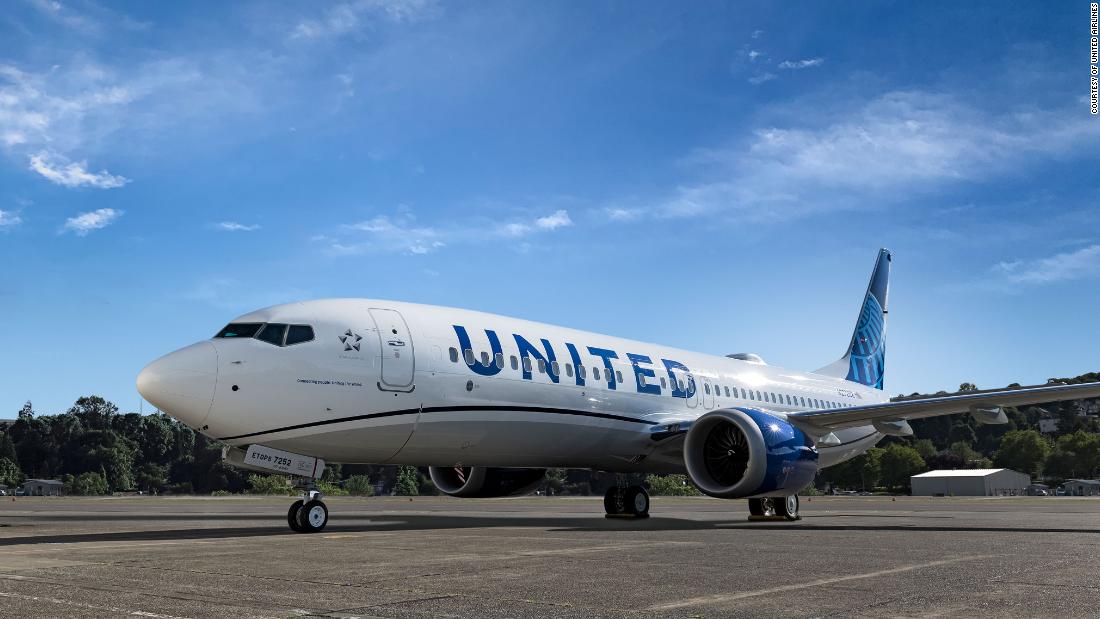
United Airlines orders 270 jets, its biggest aircraft purchase ever - CNN

The list price for the 270 jets totals about $35 billion. Airlines typically pay only a fraction of list prices — and because this is still not a good time for aircraft sales, United is paying far below half of the list price.
United is likely getting an especially significant discount, on the 200 Boeing (BA) 737 Max jets that makes up the bulk of the order. The rest of the order is for 70 Airbus (EADSF) A321neo aircraft.
The buy is another sign that airlines see a recovery from the pandemic on the horizon.
On Monday, United (UAL) told investors that it expects to post an adjusted pre-tax profit in July, the first sign of profitability by United or any major airline since the start of the Covid-19 pandemic. Demand for leisure travel is nearly back to normal, helping to lift fares, even if more lucrative business travel and international flights are still only a fraction of what they were before the pandemic.
"It's a sign that United is a savvy airplane buyer," said Ron Epstein, aerospace analyst for Bank of America. "I'm certain they're getting a good deal on Max's. But If they didn't feel reasonably good about the return of market for flying, they wouldn't be doing it."

Replacing smaller planes

United will use most of the jets ordered Tuesday to replace 200 smaller regional jets that carry about 50 passengers each, allowing it to increase capacity without adding flights at airports such as Newark and San Francisco, which limit each airline's takeoffs and landings. It will also replace about 100 older full-size planes.
It should be welcome news to passengers, who tend to dislike the smaller planes, CEO Scott Kirby said in a presentation to investors Tuesday.
"We're trying to fly 50-seat regional jets between Chicago and Dallas or between Newark and Atlanta. And we're trying to compete with people that have a much better product," CEO Scott Kirby said in a presentation to investors Tuesday. "We had no chance to compete effectively. This order is about remedying that and creating a domestic network that has a product that our customers like."
Currently, United said, regional jets are being used for a third of domestic flights. Tuesday's purchases will cut that figure down to 10%.

Expectations for rebound in business and international travel

Including Tuesday's orders, and previous orders it had on the books, United now has orders for 500 new jets coming in the next few years, with 40 planes — many of them widebody jets used on long-haul routes due to be delivered next year and 138 in 2023 alone.
It's a stunning change from a year ago, when lack of demand forced United and all other airlines worldwide to park planes and halt aircraft purchases and deliveries. This year's deliveries of new jets will still be a fraction of pre-pandemic levels. But, like United, Southwest and Delta (DAL) have also announced plane purchases in recent months.
"What a difference a year makes," Kirby said. But he said United has been planning for the recovery and discussing purchases since last summer, adding that "this is about where we expected to be" at this point.
Kirby told investors business travel is accelerating, and while it's still down 60% from pre-pandemic levels, that's an improvement from a 90% drop earlier this year. International travel is still limited, with many countries still restricting cross-border travel, but Kirby and other United executives are expecting record international travel next year.
Still, plane deliveries will still be slow this year and next. United said in a filing Tuesday that it expects the first of the planes in Tuesday's order to arrive in 2023. The order includes 150 of the newest version of the 737 Max, the Max 10, which had its first test flight earlier this month and isn't yet certified to fly passengers.

Plans to add 25,000 jobs

United plans to add about 25,000 jobs over the next five years to the 68,000 frontline positions it now has, hiring pilots, flight attendants, mechanics, gate agents and other staff needed to handle the increase in passengers it expects.
The airline cut about 22,000 employees last year during the downturn, although it has already recalled some of those employees to cope with a surge in leisure travel.
It is by far the largest order for the 737 Max since it was grounded for 20 months starting in March 2019 following two fatal crashes that killed 346 people.
Southwest (LUV), which owns more Max jets than any other airline, has ordered an additional 134 737 Max jets since the Federal Aviation Administration approved the plane to fly again. But even with Tuesday's United orders, Boeing has not recouped the more than 1,000 canceled orders of its best-selling jet since the March 2019 grounding.
As much as this is an important vote of confidence for Boeing and the 737 Max, the demand for planes is still relatively low, depressing prices that aircraft makers can charge. Boeing has slowed production of its planes, closed one factory in Washington state that had built the 787 Dreamliner widebody jet, and cut staff.
United had already placed orders for 50 additional 737 Max jets since the grounding was lifted last November — 25 of which were among those built during the grounding but never delivered because the original orders were canceled.
United also said it will revamp the interiors of all of its existing full-sized jets, adding seat-back entertainment systems, larger luggage bins and more "economy plus" seats that come with additional legroom — and higher fares.

Adblock test (Why?)


https://news.google.com/__i/rss/rd/articles/CBMiSmh0dHBzOi8vd3d3LmNubi5jb20vMjAyMS8wNi8yOS9idXNpbmVzcy91bml0ZWQtcmVjb3JkLWpldC1vcmRlci9pbmRleC5odG1s0gFOaHR0cHM6Ly9hbXAuY25uLmNvbS9jbm4vMjAyMS8wNi8yOS9idXNpbmVzcy91bml0ZWQtcmVjb3JkLWpldC1vcmRlci9pbmRleC5odG1s?oc=5

2021-06-29 13:48:00Z
52781698770404

Australia offering AstraZeneca COVID-19 vaccine to all adults as Delta variant hits major cities - CP24 Toronto's Breaking News

CANBERRA, Australia (AP) -- Australia is offering AstraZeneca to all adults in a bid to rapidly ramp up sluggish vaccination rates as more of the country on Tuesday locked down against the spread of COVID-19.

The government late Monday agreed to indemnify doctors who administer the AstraZeneca vaccine that has been blamed for at least two fatalities from a rare blood clot complication in Australia since April.

That exceeds the single death from COVID-19 in Australia this year, and vaccine hesitancy has increased with only 5% of the population fully inoculated.

Pfizer has been the recommended vaccine for people younger than 60 since a 52-year-old woman died in May of blood clots in the brain blamed on AstraZeneca.

But supply of Pfizer, the only alternative to Australian-manufactured AstraZeneca, cannot keep up with demand.

“There's a preference for Pfizer until the age of 60. That's a preference,” Chief Medical Officer Paul Kelly said on Tuesday.

“It's a discussion for doctors to have with their own patients and work through their own risk and benefit in relation to that,” Kelly added.

The Queensland state capital Brisbane and surrounding cities will be in lockdown for three days from late Tuesday after the government reported two new COVID-19 infections.

Sydney reported 19 new infections in that east coast city, Perth reported two new cases on the west coast and Darwin reported two new cases on the north coast. Those three cities and their surrounds are already in lockdown.

Australia has been relatively successful in containing clusters throughout the pandemic, registering fewer than 31,000 cases and 910 deaths within a population of 26 million. But the new clusters of a variant thought to be more contagious have highlighted the nation's vulnerability through a slow vaccine rollout.

AstraZeneca was supposed to be the mainstay of Australia's vaccination rollout free of the uncertainties of international supply chains. It was recommended for all adults until a 48-year-old woman died of blood clots in April four days after her first jab. AstraZeneca was then said to be a safe option for adults aged over 50 until the 52-year-old died.

Some epidemiologists argue the government should speed up the rollout by reducing the gap between AstraZeneca jabs from 12 to eight weeks. But some Australians are now refusing to take a second shot because of the evolving perception of the blood clotting risk.

The New South Wales state government is highlighting vaccines' apparent successes in the current Sydney cluster.

Twenty-four people who attended a birthday party on June 19 became infected with the delta variant. None had been vaccinated. But six fully vaccinated health workers and an aged care worker who had received the first of two doses attended the house party and were not infected.

“The early and strong indications from that party ... are, if you're vaccinated, you are much more likely to not be infected with COVID-19,” Health Minister Brad Hazzard said on Monday.

State Agriculture Minister Adam Marshall said he was the only one among four government colleagues who dined together at a Sydney pizza restaurant on June 21 to become infected. An infected person had been at the restaurant earlier.

Marshall revealed he was the only one among the four who had not had a dose of vaccine because, at age 36, he was not eligible.

Adblock test (Why?)


https://news.google.com/__i/rss/rd/articles/CBMihQFodHRwczovL3d3dy5jcDI0LmNvbS93b3JsZC9hdXN0cmFsaWEtb2ZmZXJpbmctYXN0cmF6ZW5lY2EtY292aWQtMTktdmFjY2luZS10by1hbGwtYWR1bHRzLWFzLWRlbHRhLXZhcmlhbnQtaGl0cy1tYWpvci1jaXRpZXMtMS41NDg5NjE30gEA?oc=5

2021-06-29 11:14:24Z
52781699368871

Senin, 28 Juni 2021

Toronto opens up 375,000 new COVID-19 vaccine appointments for July - CBC.ca

The City of Toronto says it is opening up 375,000 new vaccine appointments over the next three weeks.

Mayor John Tory says 125,000 appointments will be added for the weeks of July 5, 12 and 19, and will be available for booking starting Tuesday at 8 a.m.

The new spots come as more Ontarians became eligible for second doses of the COVID-19 vaccine on Monday.

Any residents 18 and older who received the Pfizer or Moderna vaccines at least 28 days ago, or the AstraZeneca vaccine at least eight weeks ago, can now book their second shots. 

Toronto, however, is ahead of the province's schedule. Any residents in the city ages 12 and older are eligible book their second doses as of Monday morning, provided they meet the same criteria on when they received their first dose.

Meanwhile, hundreds of volunteers administered nearly 27,000 COVID-19 vaccines at a mass clinic at Toronto's Scotiabank Arena on Sunday, in what the city is calling a new North American record.

Tory was among the 26,771 people who received a vaccine at the "Our Winning Shot" event at the home arena of the Toronto Maple Leafs and Toronto Raptors.

WATCH | Inside Toronto's record-breaking COVID-19 vaccine clinic:

Toronto broke the North American record for delivering the most COVID-19 vaccinations at a single site in a single day. Roughly 25,0000 people went to Scotiabank Arena to roll up their sleeves and push the city over the top. 1:46

The city said it broke the previous record at about 8 p.m., when 17,004 doses had been administered. Texas held that record with 17,003 shots administered at a drive-thru clinic on April 30.

The clinic ran into the late evening and offered walk-in appointments for the last several hours.

Adults were given the Moderna vaccine, while adolescents aged 12-17 were given Pfizer.

Tory said some 800 staff and volunteers helped make the day run smoothly. 

"I wasn't too hung up on whether we set records or not, but I just thought the notion of having thousands of vaccinations take place on a given day — at such an important stage with our battle against COVID-19 — very important," Tory said at a news conference Monday. 

'We want to move to Step 3 as soon as possible' 

Toronto has administered more than 3.3 million vaccine doses since the start of the immunization campaign. Some 35 per cent of adults in the city have been fully vaccinated. 

The city and its health-care partners are operating a total of 36 vaccine clinics Monday. 

Ontario is set to move into Step 2 of the government's reopening plan on Wednesday. 

Tory says getting people fully vaccinated will be crucial in moving to the next step. 

'We want to move to Step 3 as soon as possible." 

Adblock test (Why?)


https://news.google.com/__i/rss/rd/articles/CBMiaGh0dHBzOi8vd3d3LmNiYy5jYS9uZXdzL2NhbmFkYS90b3JvbnRvL3Njb3RpYWJhbmstY292aWQxOS12YWNjaW5lLWNsaW5pYy1ub3J0aC1hbWVyaWNhbi1yZWNvcmQtMS42MDgyNjA20gEgaHR0cHM6Ly93d3cuY2JjLmNhL2FtcC8xLjYwODI2MDY?oc=5

2021-06-28 15:51:32Z
52781697051184

Toronto adds 375000 appointments at city clinics as Tory warns of Delta variant delaying reopening - CP24 Toronto's Breaking News

Toronto is adding hundreds of thousands of new appointments at its vaccination clinics over the next three weeks amid concerns about the spread of the Delta variant.

Mayor John Tory says that the 375,000 new appointments at city-run clinics will be available on the provincial booking site as of 8 a.m. tomorrow.

The appointments will be for the weeks of July 5, 12 and 19.

“You can see across Europe, including Britain, a slowing down of their reopening because of the Delta variant and they were running ahead of us as you know in some of those countries on vaccination. It is a real threat there in Europe and in Britain, such that it has caused their reopening timetable to be slowed down after it was announced, and we just don't want to see that happening here,” Tory said in making the announcement. “We want to fight it off here with our very best weapon, which is the vaccines.”

COVID-19 case counts have been steadily declining for months now in lockstep with rising vaccination rates.

But concerns have arisen about the potential for the Delta variant to eventually cause a surge in cases, given research suggesting that one dose of COVID-19 vaccine is less effective against the new, more infectious variant.

That in, turn, has led to a frantic effort to get more Ontarians second doses.

Currently about 77 per cent of Ontario adults have received at least one dose of COVID-19 vaccine but only 35 per cent have been fully immunized.

“I think that you know we have to continue to draw to people's attention the experience that we've seen in other countries and that indeed the Delta variant has been a real factor in slowing down, for example, a much lauded reopening a schedule that was put in place by the British government,” Tory said. “So I think that beyond what is very intensive contact tracing and work that's being done on what is now a reduced number of cases, many of which are the Delta variant, I think the key is for people to get

vaccinated because it provides that extra level of protection to them, especially for the second dose.”

The additional appointments being made available by the City of Toronto come as Ontario officially make all adults eligible to receive their second dose earlier than previously scheduled.

Tory said that while the vaccine rollout has mostly been a success to date there are still pockets of Toronto, particularly in city’s northwest corner, where vaccination levels “are under where we want them to be and need them to be.”

To that end, Tory said that he has asked staff about the possibility of staging another large-scale vaccination event like the one held at Scotiabank Arena this weekend in which more than 25,000 doses were administered.

“It is a huge logistical undertaking because we already have organized nine city-run clinics and we're doing I think 36 total clinics across the city today so your drawing resources off to do something special like that, but you're also achieving, you know, big results so it is something that is under advisement,” he said.

The Delta variant currently accounts for an estimated 69 per cent of Ontario’s new COVID-19 cases, according to the province’s science advisory table.

Adblock test (Why?)


https://news.google.com/__i/rss/rd/articles/CBMihwFodHRwczovL3d3dy5jcDI0LmNvbS9uZXdzL3Rvcm9udG8tYWRkcy0zNzUtMDAwLWFwcG9pbnRtZW50cy1hdC1jaXR5LWNsaW5pY3MtYXMtdG9yeS13YXJucy1vZi1kZWx0YS12YXJpYW50LWRlbGF5aW5nLXJlb3BlbmluZy0xLjU0ODg0MTHSAQA?oc=5

2021-06-28 15:03:50Z
52781697051184