Senin, 30 September 2019

Volkswagen: Germany's first mass lawsuit begins - BBC News

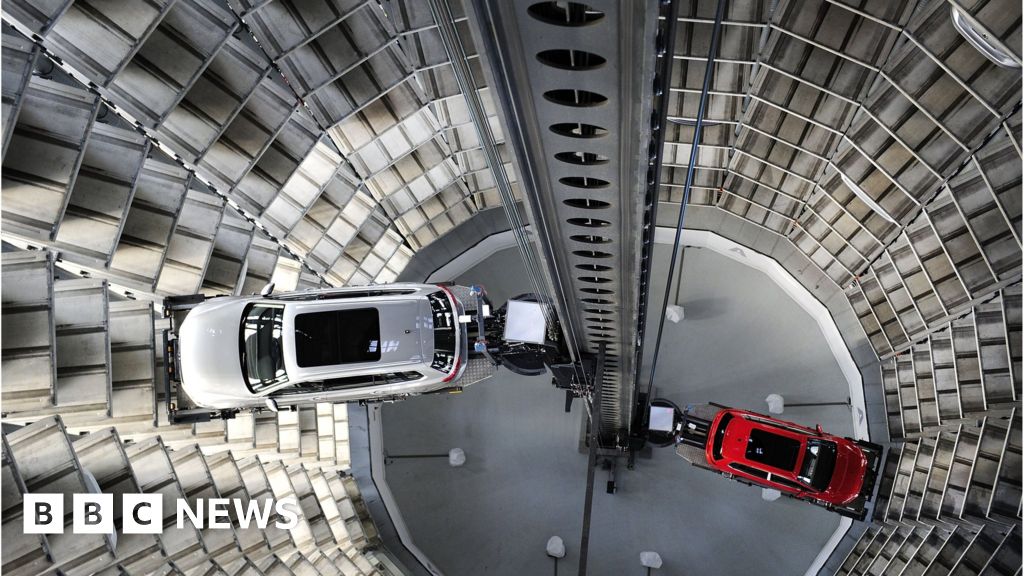
Germany's first mass lawsuit begins as 450,000 owners of diesel Volkswagen cars take on the company.

They argue they are owed compensation for being sold cars based on misleading emissions data.

The scandal has already cost VW €30bn (£26.6bn).

It has faced class action claims in the US and Australia, but this is the first time Germans could pursue group claims since the law was changed last year.

This trial will settle points of law and the claimants will later be able to file follow-up claims for compensation if they are successful.

The trial, at Braunschweig Higher Regional Court, about 20 miles from VW's Wolfsburg head office, is likely to last years, however.

Part of VW's settlements so far include a deal to buy back 500,000 cars in the US, where it has agreed to pay more than $25bn (£20bn).

In Australia the company will pay 127 million Australian dollars (£70m) to compensate owners, paying them A$1,400 apiece.

Last week it emerged that three current and former Volkswagen executives were charged with market manipulation in connection with the diesel emissions scandal.

Chief executive Herbert Diess, chairman Hans Dieter Pötsch and ex-boss Martin Winterkorn, did not inform investors early enough about the financial fallout, German prosecutors allege.

In 2015, the firm admitted using illegal software to cheat on emissions tests. VW said it was confident those allegations would prove groundless.

This may be a landmark lawsuit - and in terms of the sheer number of claimants, it's certainly attention grabbing. But it may not be the biggest concern for Volkswagen right now.

Unless there is a settlement, the legal process is likely to take take years - VW expects it to take at least four. Even if they win, car owners will have to go back to court to get compensation.

Meanwhile, VW's chairman and chief executive are both fighting criminal charges for alleged market manipulation linked to the diesel scandal.

Volkswagen itself is facing the possibility of hefty fines from the EU, after being accused of colluding with other manufacturers to delay the introduction of emissions control technology.

It's safe to say its lawyers are already keeping pretty busy at the moment. And in the meantime, the company is trying to turn itself into a leader in the market for electric cars.

Against that background, the group lawsuit may seem for the moment like just another irritation.

Let's block ads! (Why?)


https://www.bbc.com/news/business-49878247

2019-09-30 10:16:57Z
CBMiKmh0dHBzOi8vd3d3LmJiYy5jb20vbmV3cy9idXNpbmVzcy00OTg3ODI0N9IBLmh0dHBzOi8vd3d3LmJiYy5jb20vbmV3cy9hbXAvYnVzaW5lc3MtNDk4NzgyNDc

Asian shares mostly flat, Japan hurt by Sino-U.S. tensions - Investing.com

By Hideyuki Sano and Vidya Ranganathan

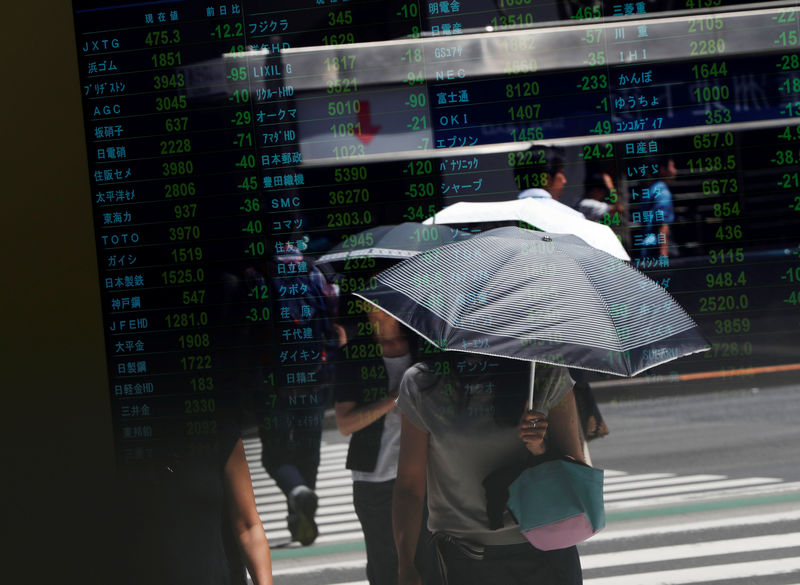
TOKYO/SINGAPORE (Reuters) - Asian stock markets, including China's, were little changed on Monday, shrugging off news that the U.S. administration is considering delisting Chinese companies from U.S. stock exchanges.

MSCI's broadest index of Asia-Pacific shares outside Japan () was flat, while China's Shanghai stock index () slipped 0.1%, barely responding to any of the concerns around the latest Sino-U.S. tensions that caused the Nasdaq index () to fall more than 1% on Friday.

European shares were seen struggling when they open for trading. Pan-European Euro Stoxx 50 futures () were down 0.11%, German DAX futures () down 0.08% and futures () 0.16% lower.

Risk assets took a hit in U.S. trade on Friday following news the Trump administration is considering radical new financial pressure tactics on Beijing, including the possibility of delisting Chinese companies from U.S. stock exchanges.

The report knocked Chinese shares listed on U.S. exchanges, with Alibaba Group Holding (N:) falling 5.15% and JD.com (O:) 5.95% on Friday.

Worries such an escalation would hurt Japan the most weighed on the Nikkei (), which shed 0.9%. U.S. stock futures () gained 0.35%, paring most of Friday's 0.53% fall in the index.

Trading in Chinese markets was quiet ahead of a long break. Chinese share markets will trade only on Monday this week ahead of the country's National Day holiday, which runs until Oct. 7.

There were mixed signals from China's manufacturing surveys on Monday, which showed sustained weakness in exports and surprising improvement in domestic consumption indicators, and a Chinese central bank statement briefly hinting at plans for more stimulative policies.

China's yuan was little moved at 7.1260 yuan per dollar, while the rallied a bit from Friday's three-week low of 7.1520.

The delisting of Chinese companies from U.S. stock exchanges was part of a broader effort to limit U.S. investment in Chinese companies, two sources briefed on the matter told Reuters.

A U.S. Treasury official said the United States does not currently plan to stop Chinese companies from listing on U.S. exchanges, Bloomberg reported on Saturday.

"While China runs a current account surplus and is a net creditor nation, Chinese companies are net debtors and rely on foreign capital," Koji Fukaya, president of Office Fukaya Consulting.

"Washington seems to be trying to limit Chinese companies' activities by putting pressure on their funding," he said.

Still, with trade talks between the United States and China expected to be held Oct. 10-11, many market players are hoping such drastic measures on capital markets will be avoided.

"At this point, markets will have to wait and see. Of course we need to be guarded against more crazy headlines, but this week could be a bit calmer given holidays in China. Economic data will likely be the main driver for markets," said Kyosuke Suzuki, director of forex at Societe Generale (PA:).

U.S. data on Friday showed consumer spending barely rose in August and business investment remained weak, suggesting the American economy was losing momentum as the trade dispute drags on.

Industrial output in Japan and South Korea, released Monday morning, dropped more than expected, underscoring the headwinds from the trade war.

Investors are also keeping a wary eye on U.S. politics.

U.S. House Speaker Nancy Pelosi said public opinion is now on the side of an impeachment inquiry against Trump following the release of new information about his conversations with Ukrainian President Volodymyr Zelenskiy.

Major currencies were little changed, with the yen trading slightly firmer at 107.75 yen .

The euro hovered around $1.0932 (), having sunk to a 28-month low of $1.0904 on Friday as concerns about tepid growth in Europe weighed on the common currency.

Sterling traded at $1.23 , not far from Friday's low of $1.2270, its lowest since Sept. 9.

Boris Johnson said on Sunday he would not quit as Britain's prime minister even if he fails to secure a deal to leave the European Union, insisting only his Conservative government can deliver Brexit on Oct. 31.

Oil prices dipped but stayed off last week's lows.

Saudi Arabia's crown prince warned in an interview with CBS program "60 Minutes" aired on Sunday that crude prices could spike to "unimaginably high numbers" if the world does not come together to deter Iran.

But Crown Prince Mohammed bin Salman said he would prefer a political solution to a military one, adding the Sept. 14 attacks on the kingdom's oil facilities were an act of war by Iran.

Brent crude () futures fell 0.36% to $61.64 a barrel while U.S. West Texas Intermediate (WTI) crude () fell 0.14% to $55.83 per barrel.

(This story corrects headline and first paragraph to Asia shares 'mostly flat' (not 'edge lower') and in 2nd paragraph the MSCI Asia-ex-Japan index to flat (not down 0.55%)

Let's block ads! (Why?)


https://www.investing.com/news/stock-market-news/asian-shares-mostly-flat-japan-hurt-by-sinous-tensions-1988652

2019-09-30 06:35:00Z
CBMib2h0dHBzOi8vd3d3LmludmVzdGluZy5jb20vbmV3cy9zdG9jay1tYXJrZXQtbmV3cy9hc2lhbi1zaGFyZXMtbW9zdGx5LWZsYXQtamFwYW4taHVydC1ieS1zaW5vdXMtdGVuc2lvbnMtMTk4ODY1MtIBAA
Minggu, 29 September 2019

See National Coffee Day deals across Michigan - MLive.com

According to the National Coffee Association, 64 percent of Americans drink at least one cup of coffee a day.

That number is likely to increase on Sunday, National Coffee Day, because chains large and small are offering deals that allows customers across the United States to get a cup of Joe for free.

Many retailers are also using the day to give back to charity using customer purchases. Here is a look at the freebies and deals Michiganders should be aware of.

A customer pours coffee into a mug at Julianna's Restaurant in Kalamazoo, Michigan on Monday, July 8, 2019. Emil Lippe | MLive.com

Don't Edit

Barnes & Noble

Barnes & Noble

Customers get a free hot or iced tall coffee with the purchase of any bake case item from a Barnes & Noble Café on National Coffee Day.

Don't Edit

A barista reaches for a coffee cup during the grand opening of Biggby Coffee on Horton Road on Feb 3, 2016. MLive File Photo

Biggby Coffee

Free hot brewed coffee up to 24 ounces on National Coffee Day.

Don't Edit

Brueggers Bagels

Brueggers Bagels

Through Sunday, all Bruegger's Bagels Inner Circle members will get one free medium coffee with purchase. Sign up for the Inner Circle here: Inner Circle Rewards Program. 

Don't Edit

Circle K on Vine Street in Eastlake, Ohio. Photo by Chuck Crow

Circle K

Circle K is offering a free medium coffee to customers on National Coffee Day via the Circle K app at participating locations. Customers can also enjoy a free Belvita Breakfast Biscuit with their free coffee.

Don't Edit

Don't Edit

Coffee Bean & Tea Leaf

Coffee Bean & Tea Leaf

Guests can receive a complimentary 16 oz brewed coffee (hot or iced) with any food or bakery item purchase (minimum of $2). The offer is available all day and is limited to one complimentary coffee per guest.

Don't Edit

Del Taco

Customers can get a free value iced coffee with $3 purchase.

Don't Edit

Dunkin'

Dunkin' is celebrating National Coffee Day with a buy one, get one offer. On Sunday, September 29, anyone who purchases a hot coffee at participating Dunkin' restaurants nationwide will get one hot coffee free (of equal or lesser value).

Don't Edit

Godiva

In celebration of National Coffee Day, you can receive a free 12-ounce hot or iced coffee at Godiva Café locations with any purchase.

Don't Edit

Krispy Kreme

Krispy Kreme

Caffeine seekers can score both a free small coffee and glazed doughnut on National Coffee Day.

Don't Edit

Don't Edit

Associated Press.

7-Eleven

This national grab-and-go chain is honoring the holiday by charging just $1 for any size coffee all day on Sunday.

Don't Edit

Tim Hortons

Tim Hortons

Tim Hortons guests can receive one free Tims Rewards reward when they order through the Tims Rewards mobile app. Customers can redeem their free reward for coffee and eligible beverages and baked goods.

Don't Edit

Let's block ads! (Why?)


https://www.mlive.com/news/g66l-2019/09/9e176b56516557/see-national-coffee-day-deals-across-michigan.html

2019-09-29 12:43:07Z
52780396159337

Wall Street Falls in Love Again With Companies Loaded Up on Debt - Bloomberg

[unable to retrieve full-text content]

Wall Street Falls in Love Again With Companies Loaded Up on Debt  Bloomberg
https://www.bloomberg.com/news/articles/2019-09-29/wall-street-falls-in-love-again-with-companies-loaded-up-on-debt

2019-09-29 11:00:00Z
CAIiEAmcd8OS8rSh1IVGOe41_goqGQgEKhAIACoHCAow4uzwCjCF3bsCMKrOrwM

Zantac: CVS latest to suspend heartburn drug over cancer fears - BBC News

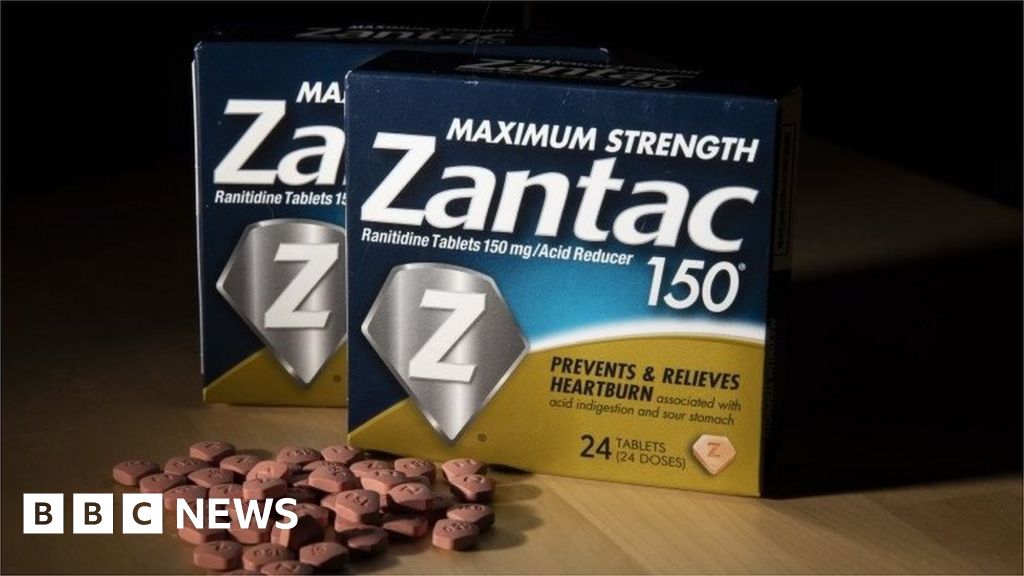
US retailer CVS has become the latest to suspend the sale of a heartburn drug being investigated for links to cancer.

It follows concern in several countries over the presence of impurities in Zantac and other ranitidine products.

Canada and France have already announced Zantac recalls. The US and the European Union are investigating.

Health authorities say there is no immediate risk, but patients have been advised to consult a doctor who can prescribe alternatives to ranitidine.

What is the fear about?

On 13 September, both the US Food and Drug Administration (FDA) and the European Medicines Agency (EMA) published their decisions to review the presence of N-nitrosodimethylamine (NDMA) in medicines containing the drug ranitidine.

NDMA is classified as a probable human carcinogen (a substance that could cause cancer) on the basis of animal studies.

NDMA is found in water and foods, including meats, dairy products, and vegetables, but is not expected to cause harm when ingested in very low levels, EMA says.

Ranitidine products are used to reduce the production of stomach acid in patients with conditions such as heartburn and stomach ulcers.

They are available over-the-counter and on prescription.

Who has recalled the products so far?

CVS's announcement on Saturday said it was suspending the sale of Zantac and CVS Health brand ranitidine products "out of an abundance of caution".

"Zantac brand products and CVS brand ranitidine products have not been recalled, and the FDA is not recommending that patients stop taking ranitidine at this time," the company said.

Walgreens, Walmart and Rite Aid in the US had earlier taken a similar decision.

Canada and France have removed the drugs from pharmacy shelves. A number of other countries have followed suit.

What should patients do?

Health regulators are urging people taking ranitidine not do discontinue it immediately.

The FDA said, however, that those taking it by prescription should contact health professionals about alternatives. And those buying it over the counter could consider other options.

French authorities also emphasised there was no "acute risk" and patients should not stop the medication or return it to pharmacies.

Let's block ads! (Why?)


https://www.bbc.com/news/health-49868852

2019-09-29 09:11:36Z
CBMiKGh0dHBzOi8vd3d3LmJiYy5jb20vbmV3cy9oZWFsdGgtNDk4Njg4NTLSASxodHRwczovL3d3dy5iYmMuY29tL25ld3MvYW1wL2hlYWx0aC00OTg2ODg1Mg

Sabtu, 28 September 2019

9 ex-Tesla employees reveal the worst parts of working there - Business Insider

tesla employeeNine former Tesla employees, who worked at the company between 2008 and this year, described to Business Insider their least favorite parts of their jobs.Spencer Platt / Getty Images

Like many companies engaged in a highly competitive business, Tesla is not always an easy place to work. From long hours to the stress of working under CEO Elon Musk, a job at the electric-car maker can be demanding.

Nine former employees who worked at the company between 2008 and 2019 described their least favorite parts of their jobs. Each asked for anonymity due to a fear of reprisal from Tesla.

Here's what they said.

The photos in this story do not depict the former Tesla employees Business Insider interviewed.

Are you a current or former Tesla employee? Do you have an opinion about what it's like to work there? Contact this reporter at mmatousek@businessinsider.com.

Let's block ads! (Why?)


https://www.businessinsider.com/ex-tesla-employees-reveal-the-worst-parts-of-working-there-2019-9

2019-09-28 13:23:09Z
52780395148870

Chinese Tech Stocks Tumble as Trump Investigates Scorched Earth Policy - Wccftech

With the latest round in the US – China trade war about to heat up due to the impending trade talks scheduled for October, reports have emerged that President Trump is looking for more cards to play at the talks. Specifically, the possibility of limiting US capital outflows to China and Chinese companies. This would be a major escalation of the trade war which has thus far only really seen the two countries impose tariffs on each other (albeit ones amounting to hundreds of billions of dollars). Everything else has broadly remained the status quo.

Threats of Chinese Yuan depreciation obviously crept in as we reported previously (here) along with the possibility for rare earths exports to be limited by China as alternative measures since the US obviously has more Chinese imports it can tariff than vice versa and can therefore impose greater tariffs than the Chinese can directly retaliate to. As the US will basically be tariffing everything from China by the end of the year if no progress in trade talks is made before that, this phase of the trade war feels like it is approaching its zenith and both sides need to find the tools and levers which will define the next stage if the situation can’t be brought to heel.

China Tries to Open Up to Foreign Investment – Trump Considers Slamming Door Shut

China is still deep in the throes of its transition to a modern economy. Much of the economy has been liberalised and it takes an extremely naïve person to call it a communist state these days, but it is still a long way from being a free market economy. One of the areas it is trying to open up in has been allowing foreign financial investment which today is heavily restricted by a variety of means.

Hong Kong has long been seen as the gateway for the West to access China and recent overtures by the Hong Kong Stock Exchange (HKG:0388) to attempt to buy the London Stock Exchange (LON:LSE) (which itself is wrapped up in its attempt to buy the former Thomson Reuters financial services business: Refinitiv) have done nothing to dampen that although the prospect is viewed with some suspicion in the West. Additionally, China has passed legislation this year aimed at opening up the country to foreign investors which is estimated to bring in an additional $1.5 trillion over the next decade.

That, combined with Chinese companies listing on US markets such as Alibaba (NYSE:BABA), Baidu (NASDAQ:BIDU) and others, along with major index companies increasingly including Chinese companies in their indices means that China has been seeing growth in foreign investment inflows in recent years as pension funds and others look to capture some index benchmark performance and gain exposure to the major benchmark indices as well as the region which until the trade war was viewed as a high growth economy.

That may all be about to change though as the President Trump is apparently investigating ways that it can stop American money ending up in China and Chinese companies. This is said to include the possibility of:

  • Forcibly delisting Chinese companies from US stock exchanges.
  • Stopping US government pension funds from investing in the Chinese market.
  • Stopping US index companies such as MSCI (NYSE:MSCI) from including Chinese companies in their indices.

It’s not immediately apparent how Trump would go about achieving this, but the net effect would be clear as billions of dollars would no longer be available to Chinese companies. US listed Chinese stocks like Alibaba, Baidu, JD.Com (NASDAQ:JD) and Tencent (OTCMKTS:TCEHY) among others all dipped on the reports with Alibaba losing over $20 billion in market cap and finishing the day down over 5%. In addition, the Yuan slipped against the dollar further beyond the 7:1 level.

Wrapping Up

It may be that this leads to nothing and is simply something President Trump wants to have as a card in hand to be able to throw on the table as a factor to be considered in the trade talks which are about to kick off again. It would be naïve however to think this is a bluff, the US needs a trade deal, as does China but both sides have shown repeatedly that they are willing to go to the next round and further damage both their economies as well as the wider world in the spat.

China has been broadly maintaining its holdings of US treasury notes (currently sitting at $1.1 trillion) but the federal government has been borrowing like mad so China’s holding as a proportion of the total amount of US government debt outstanding has been shrinking. A scorched earth policy of a firesale would harm China too in that the value of the bonds would of course plummet, however it’s a factor to consider given that the US repo market is currently not in great shape as the Fed has had to intervene over the last week or so given that the market is currently awash in US T-notes, it may also be that there is a weak bank somewhere but nothing has emerged yet. But this could be a last resort option to pressure the cracks that are starting to show in the US financial system.

The US is more advanced from a financial services perspective than China obviously and has been pushing for China to open up its financial markets to foreigners. These steps would reverse the progress which has been made on that front and likely lead US fund managers that currently have holdings in Chinese companies/China to consider rebalancing their portfolios. This would obviously lead to inflows likely in domestic US listed companies as well as potentially other asset classes.

There is however another angle to this conversation. The UK is currently in the midst of its long awaited attempt to exit the European Union. Assuming this goes ahead, the UK will no doubt be courting both the US and China for trade deals and given that London is (although likely to be somewhat diminished post-Brexit from a financial services perspective) still generally ranked 1st or 2nd as the financial capital of the world, the overtures from Hong Kong to London start to take on additional context in this sense and if President Trump does indeed end up implementing blocks on US money ending up in Chinese hands, Beijing may turn its eyes increasingly to London, particularly as the US becomes increasingly hostile to China and its companies (read our coverage of the Global Cyber Policy Watch lobby group’s stance on Huawei and China here).

Submit

Let's block ads! (Why?)


https://wccftech.com/chinese-tech-stocks-tumble-as-trump-investigates-scorched-earth-policy/

2019-09-28 11:56:52Z
52780394772555